Early on in my evolution of becoming a mountain biker, I remember meeting someone who had a singlespeed mountain bike. I was curious, even to the point of asking if I might someday borrow the bike and experience singlespeeding for myself, but never did. (Ironically, while living in the Midwest, where a singlespeed mountain bike is perhaps most reasonable, they seemed to be rare. Yet, here in Virginia, where the mountains accentuate the intimidation of a singlespeed, they are incredibly popular.)
Then, last fall, I happened to see on Facebook that a friend in Indianapolis was selling his Salsa Selma, an older aluminum-carbon hardtail singlespeed. I did a bit of haggling, felt I was getting a good deal on a “cheap” singlespeed to try out the sport, and brokered the deal through my brother, who was able to bring the bike to me. Something about the blue and gray paint and the Midwest origins of the bike reminded me of Iceman Cometh, the legendary Michigan mountain bike race, and so my first singlespeed mountain bike became “Iceman.”
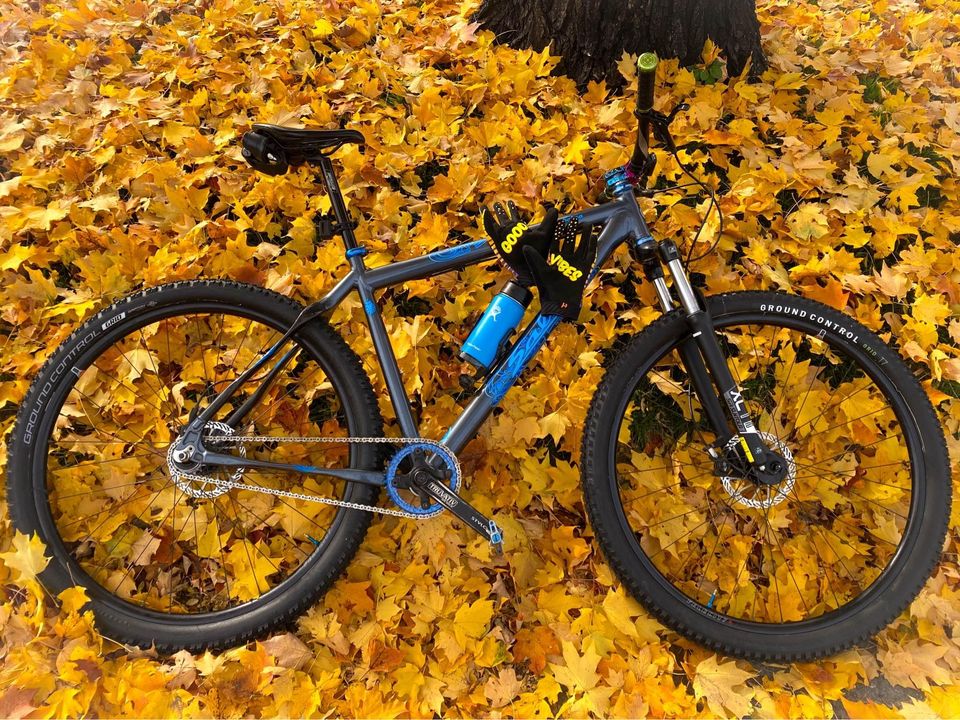
The bike wasn’t a perfect fit. It was a bit small, and didn’t have a dropper post when I got it, so required a bit of re-learning how to mountain bike without a dropper (and with the old-school geometry and steep head tube angles of early 2000s mountain bikes), but still, it was love at first ride. Unfortunately, I was dealing with a persistent foot injury that eventually sidelined me from the bike for most of the 2021-2022 offseason, and so my time on Iceman that first winter was far more limited than I hoped. Once racing started up in the spring, the singlespeed was shuffled to the back of the pack, relegated to the role of “offseason training machine.”
Still, the spark was lit.
By mid-October, with two major races left in my season, I was already pulling Iceman out of storage. With a new air fork and a short-travel dropper post (shared with my gravel bike), I hoped that I was ready to rip! Yet, only a few rides in, I was both enamored and frustrated. I could feel the rhythm pulsing through my veins, but the balance and confidence descending that I was accustomed to in my more modern mountain bikes just wasn’t there. The downhills felt sketchy, which left me a little scared, and more than a little annoyed that I didn’t feel like I could ride the bike how I wanted to ride.
Still, I was hooked.
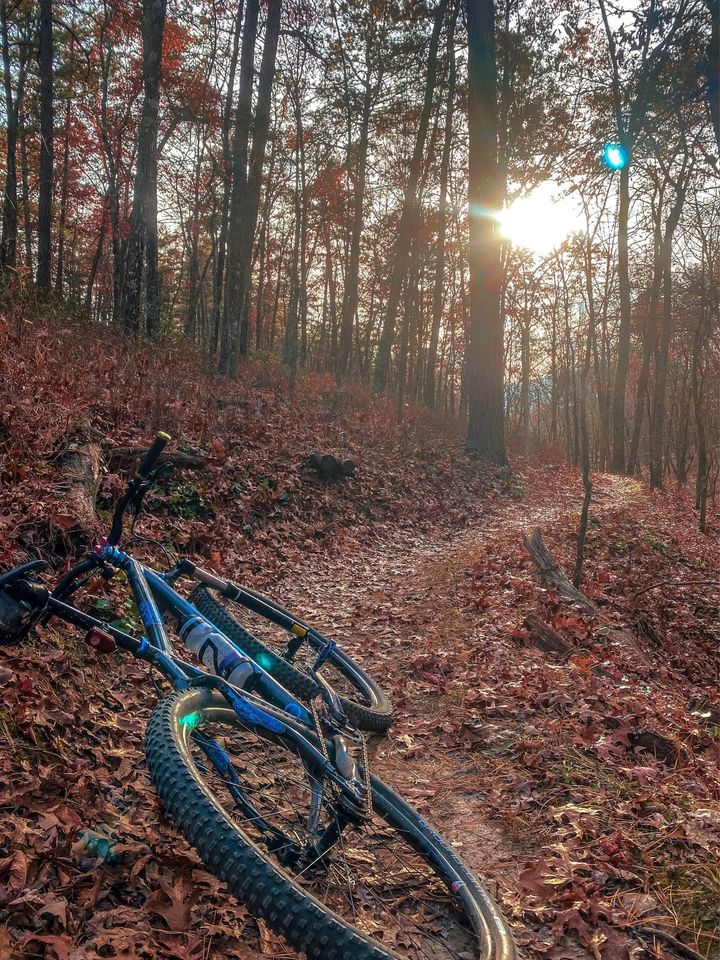
I put Iceman up for sale, and started acquiring the parts necessary to convert my Specialized Epic Hardtail into a singlespeed. Within two weeks, I had traded a twenty-year old aluminum singlespeed in for a top-shelf carbon one, complete with a 120mm fork and remote, full-length dropper post.
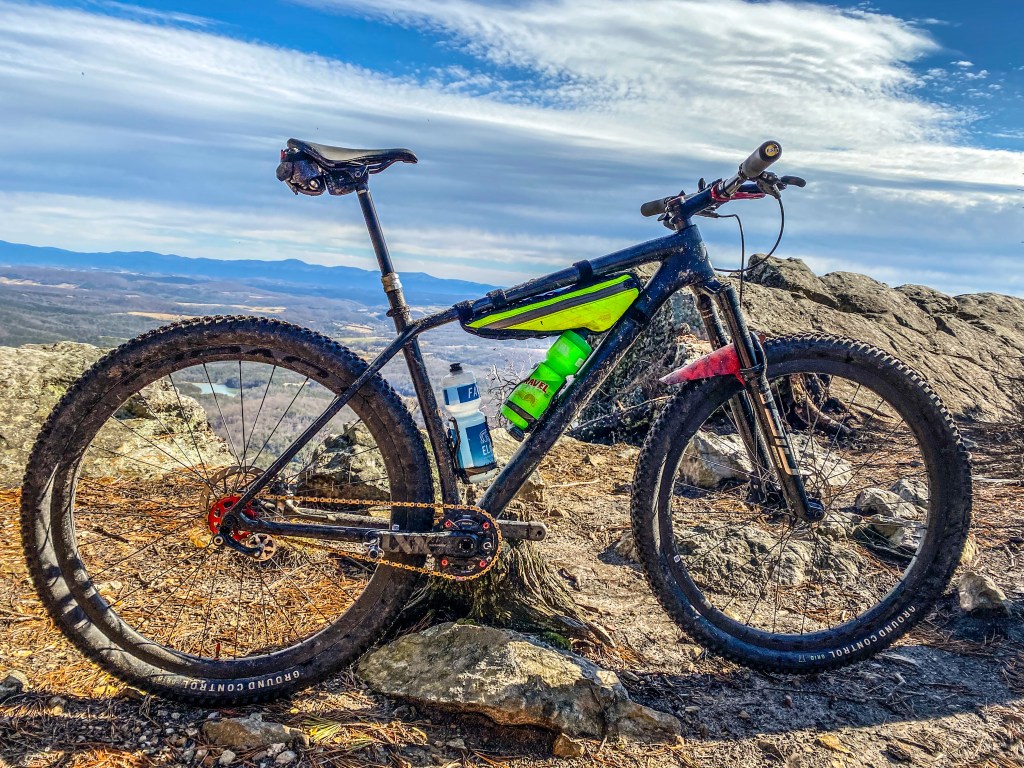
For the last several months, I’ve been riding “Mr. T.” in his singlespeed configuration. Originally, I intended to swap the bike back to it’s geared set-up for race season, but riding a singlespeed that is light, fast, and confident is a little like taking the first sip of a cold soda water after a hot ride. It just leaves you wanting more.
In January, I did my first race on a singlespeed, and it was there that it really clicked. The beauty of riding a singlespeed is in its simplicity. Just pedal. There is no shifting to think about, no option to easier, hardly even a choice between sitting or standing to climb the hills. Just pedal. My lungs still burning from the effort, I noted that singlespeed racing was just as hard as one might expect–and twice the fun.
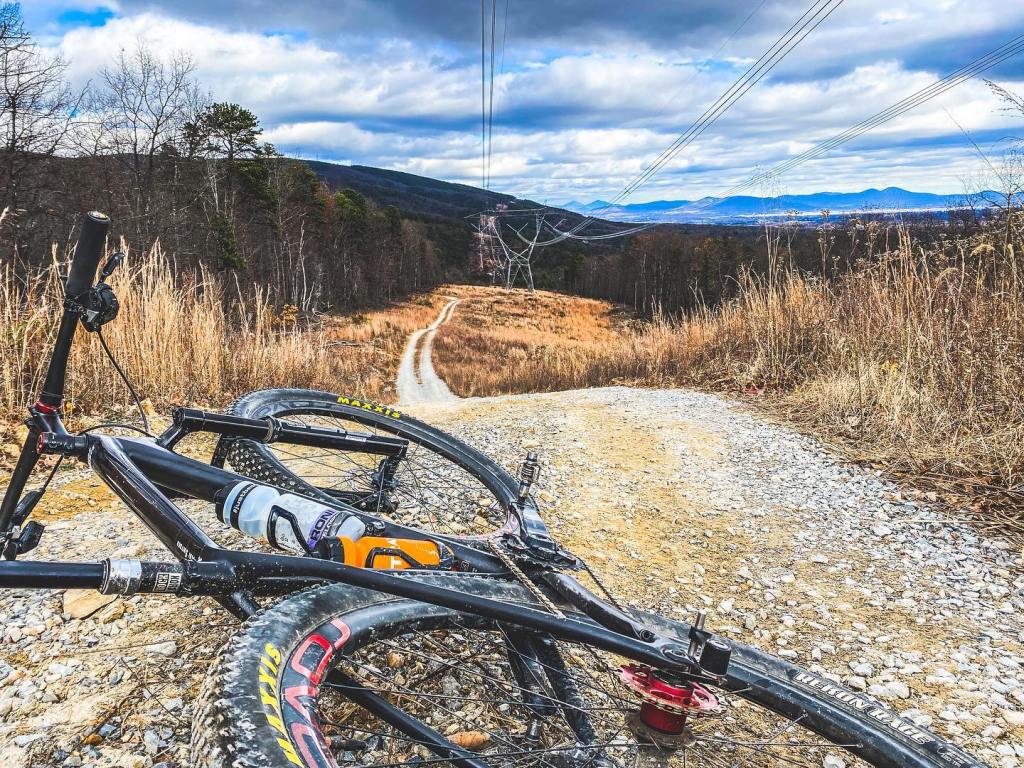
By then, I was committed. Still too intimidated to attempt marathon-distance events on the singlespeed, I decided to race any non-UCI cross-country events singlespeed for this season.
At the most recent MTX event (a local short-track handicap-format mountain bike race), I raced Mr. T. again. This time, the course was much less conducive to a singlespeed, with long stretches of flat pavement that would have required an impossibly hard gear to pedal through, or, with my chosen gearing, meant short bursts of spinning followed by coasting, but no real acceleration. The result was that I was passed by several riders repeatedly, as they would pedal hard through the flat grades, and I would pass again on the climbs. By the third or fourth lap, I was heckling a few of them for having “so many gears” and still getting passed on the climbs. Breathless, but still giggling like a schoolgirl, I was having the time of my life. Something about the lack of choice and the forced effort of putting everything I had into each pedal stroke just to keep the pedals turning brought joy to my soul. Left, right, one, two, left, right, again. When I finished, there was no doubt in my mind that I’d never had so much fun racing my bike.
This left me with a question: Two MTX short-track style races, a few two-hour rides on Mill Mountain, and a few similar-length rides at Carvin’s Cove, but I wasn’t sure if I was brave (or strong) enough to do a full-length backcountry ride on the singlespeed. One of the things I love most about riding and training here in Roanoke is the backcountry riding. Long climbs, stunning views, exhilarating bench-cut singletrack–what isn’t to love?! But 25+ miles and equal amounts of climbing on a singlespeed was intimidating.
When Monday rolled around, the training plan dictated a 3 hour ride with force efforts, perfect for riding a singlespeed, and my geared mountain bike was in the shop. I wasn’t in the mood for gravel, and recent rainfall meant any non-backcountry trails would be slop. It was the perfect storm of motivation for me to step outside of my comfort zone.
My planned route featured a 3 mile climb averaging 9% grade up to a ridgeline. I would traverse the ridge for approximately 4 miles, then descend, before climbing again. I can’t say how many times I looked at the profile of that climb on the route map with uncertainty. Could I make it? Was I strong enough to pedal a singlespeed for that long on that kind of incline? There was only one way to find out.
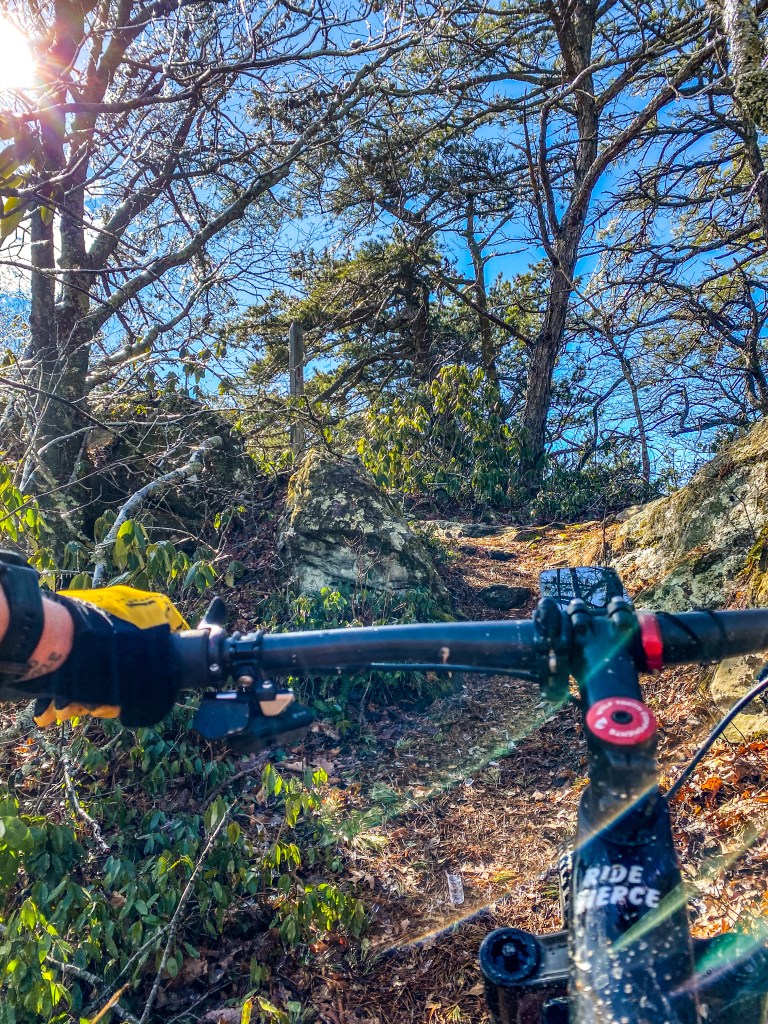
As I started to climb, I discovered a flow state previously unknown to me. The ability to shift gears while climbing, or the frustration of wanting to shift into a non-existent easier gear, has perhaps always kept me from finding flow while climbing. But as I churned the pedals of my singlespeed up the climb, the rhythm became like breath: in, out, up, down, round-and-round, left, right, breathe. It was simple. It was beautiful. It was addicting.
It was also extremely hard.
But I did it.
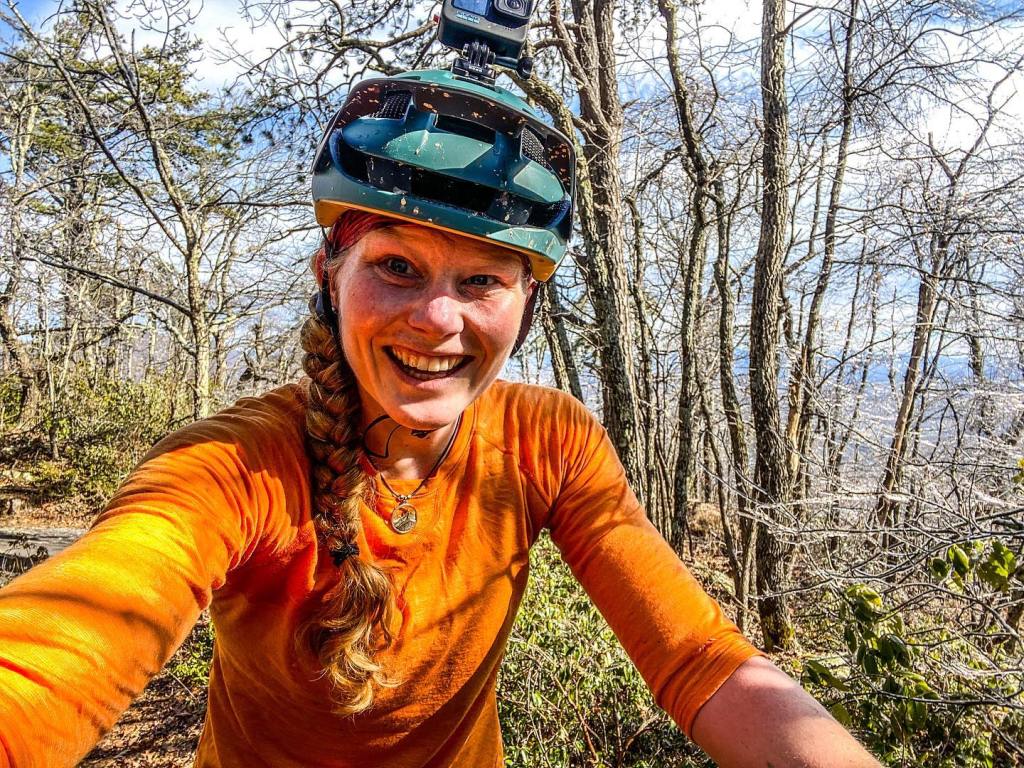
When I got to the ridgeline, I was shocked and fascinated to realize that it was an icy winter wonderland, so the ridge riding was more of a experiment in avoiding falling ice chunks and navigating through foliage heavy with ice, but eventually, stops and starts later, I reached the descent, with its enthralling singletrack, swollen mountain creeks, and benchcut flow. Each little climb that followed felt like a small moment of focused breath between the breathless descents, and I finished that ride eager to return.

The message certainly is not that singlespeed is the only way, or even the perfect way. It’s not. 1×12 drivetrains are a gift from God (or SRAM). But I’ve certainly found some joy in the simplicity of a singlespeed that had been elusive, or at least manifested differently, riding with gears. If anything, the message is to not be afraid of simplicity, of hard things, of pain, or even of trying something challenging–the rewards may be far greater than the apprehension of starting.
 Ride Fierce Racing