Where do I even start? Just the realization that I raced in an Elite World Championship race seems a bit surreal.
The “pipe dream” that has been motivating my race schedule for the past year was to qualify for the 2024 XCM World Championship, to be held at Snowshoe, in WV, but even as I poured myself into training and racing in hopes for qualify, I held it as just that, a pipe dream. Possible, but unlikely. This spring, when I saw that the petition form for the 2023 XCM World Championship was open (along with the Pan-American Championship in Colombia, which I also raced—what?!), I “put my name in the hat,” not ever really thinking I’d have any chance at all of being selected.
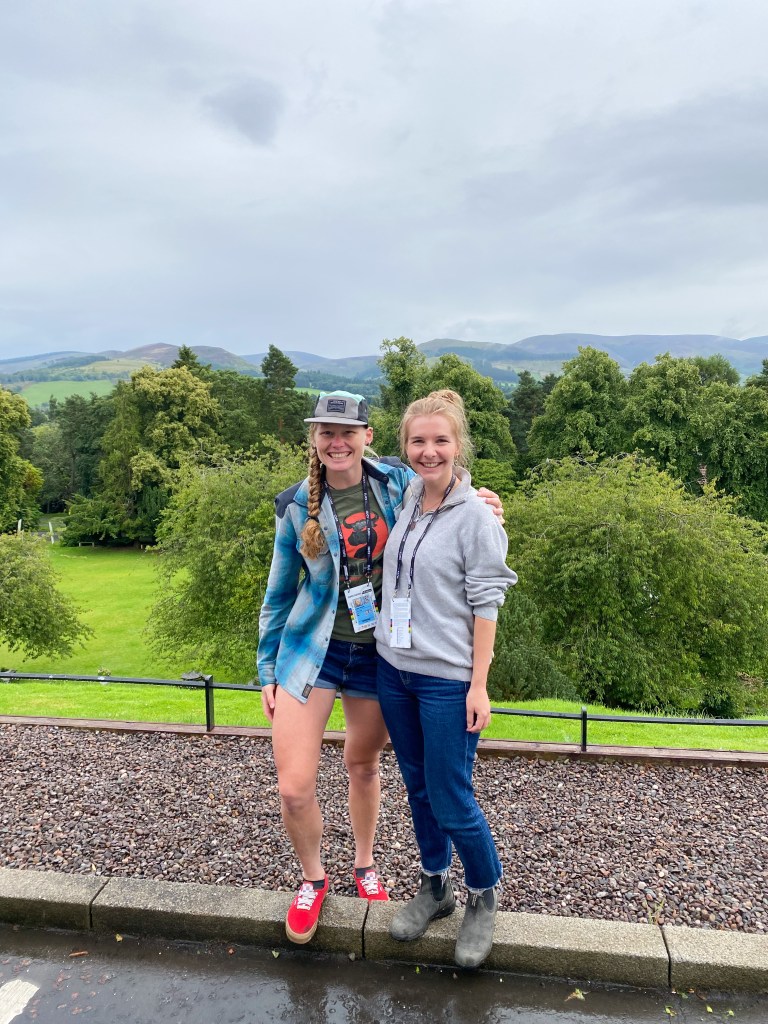
Somewhat ironically, I was at the U.S. Olympic Training Center for orientation with the USOPC Performance Innovation team for my summer internship when I got the notification from USA Cycling that I had been selected. At lunch on the previous day, they had asked if I was planning to go to “Super Worlds,” and I said that I wasn’t. To be able to share my selection with the team at USOPC was a fun little bonus on top of the excitement of being selected at all.
Of course, for those of you who have been following along on the blog or Instagram, you know that just a few weeks after finding out that I’d been selected for Worlds, I crashed (for the second time) at Pan-Ams in Colombia and blew my knee up all over again—just 7 weeks prior to the World Championship. After finally recovering and feeling strong after the first knee injury, this was psychologically devastating.
This is perhaps as good a time as any to interject my overwhelming gratitude for my community in Roanoke. Not only were Pan-Ams and Worlds two additional weeks of travel where I needed help to watch my pup (and both with travel complications coming home, so not only generous help to start with, but also flexibility when plans changed due to flight cancellations!), the well-wishes and overall support has been really, really cool—from PT recommendations to bike prep on a tight turnaround (thanks Kyle & Cardinal Bicycle!).
Three weeks before Worlds, and just one week after getting back on the bike post-knee-injury, I somewhat spur-of-the-moment raced age group at the USA Enduro National Championship at Ride Rock Creek in North Carolina. In hindsight, I didn’t ride as well as I likely could have because of how “fresh” the knee injury was. I rode “ok,” but I rode scared to crash—which doesn’t usually work out too well. The course was steep, off-camber, and muddy—all things I don’t have much experience with, and at the end of the weekend, I left fired up to keep working on my skills in those areas. Little did I know how valuable that experience would be.
The next weekend, I raced the Wilderness 101k in Pennsylvania, a race I’ve now done three times. With a finish time of just under 7 hours, it was the longest I’d spent on a bike in 2023. Despite feeling a bit awkward and slow on the Central-Pennsylvania rocks, I set PRs on nearly every section of singletrack, and came away with the win. After a cumulative five weeks off the bike between April and July, a win was a welcome confidence boost going into the biggest competition of my life.
I don’t typically get nervous before a race, but the thought of racing at the World Championship tied my stomach up in knots a bit in the week leading up to the race—until a friend reminded me that there was nothing to be nervous about: all I needed to do was go ride my bike. The minute I got onto the trails in Scotland, I knew he was right.
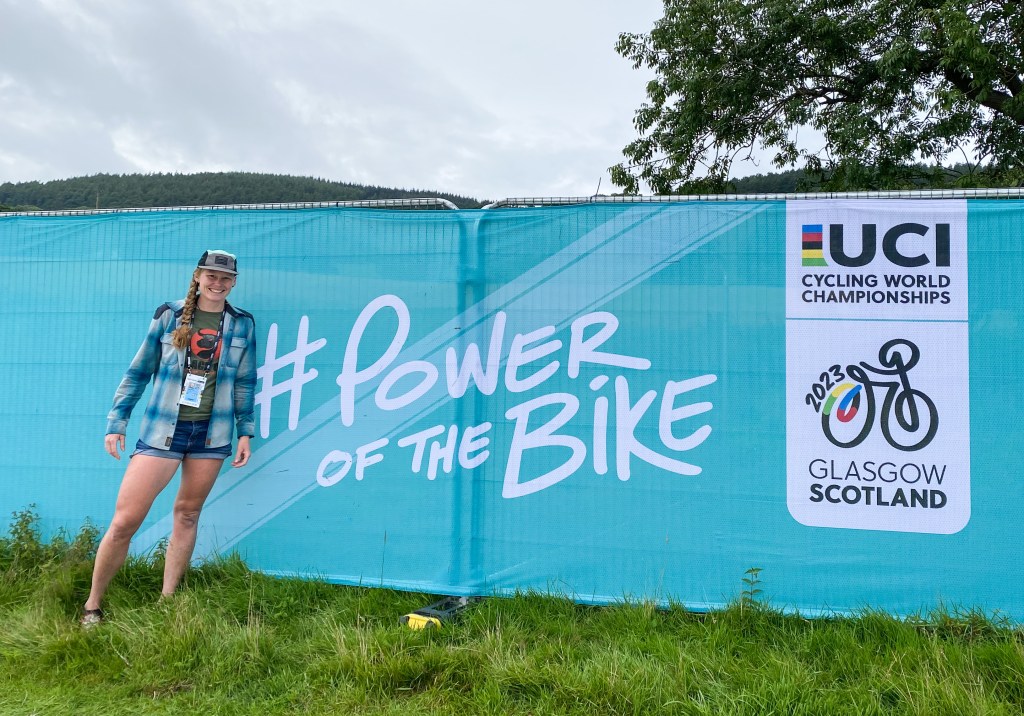
I arrived in Edinburgh on Thursday, along with Chris, another Team USA rider who I had arranged to split a rental car and hotel room with, in order to minimize costs where possible. In total, I think there were 8-10 bikes in the baggage claim area from our flight alone, with riders flying into Scotland for any number of disciplines happening as a part of the UCI Cycling World Championship. The experience of being in Scotland was a bit uncanny, as years of living and working alongside Scottish and British friends in Tanzania made the accents familiar and driving a manual transmission vehicle on the left side of the road hardly seemed unusual (though it did take me a minute with our specific rental car to figure out how to access reverse—“newfangled” machines, these!). Needless to say, I think my driving scared Chris a few times. =D
After getting lunch and checking into our hotel, we built our bikes and made our first venture out onto the course. I immediately felt right at home. The trails were damp, rooted, and surrounded by lush forests. I’ve never ridden in British Columbia, but I imagine it would have a similar vibe. The closest comparison I have is riding at Snowshoe, which, although it terrified me a year ago when I first arrived for the XCO World Cup, I’ve slowly been acclimating to. Then, out of nowhere, the trails would explode out of the forest into fields of heather, more resembling what I imagine wet Colorado trails to be like. Whether deep in the forest or atop the heathered fields, the views were stunning.
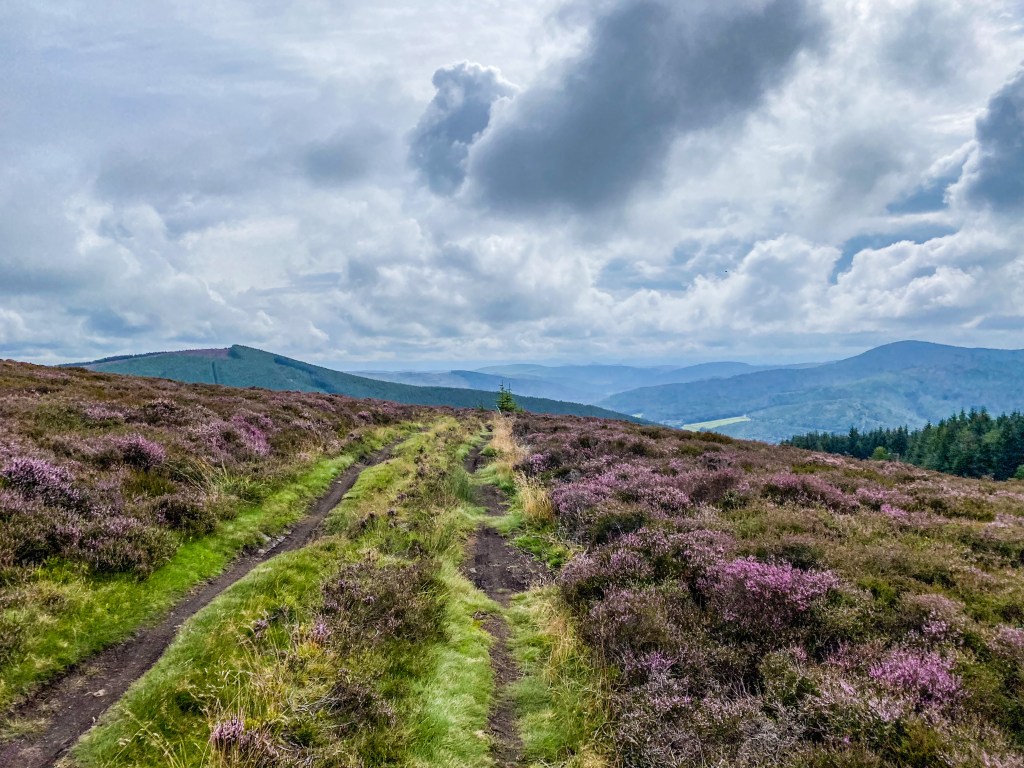
Somewhere circulating the world of Instagram reels is a video at least partially-created by Wahoo Fitness that shares the vision for this particular XCM World Championship course and its designer, who passed away in the year leading up to the event. In brief, he poured his heart into the course, with a passion for creating a marathon mtb course that would really highlight the soul of mountain biking. It did exactly that.
I could not have dreamed up a course that I would enjoy more. With each day of pre-riding, I fell more in love with the riding in the Tweed Valley—and realized that I was only scratching the surface of the phenomenal trails in the area. In 60 miles and ~10,000 feet of climbing, we rode from Innerleithen to Glentress Forest, climbing up gravel roads, traversing singletrack through dense pine forests, riding heathered ridge lines and through open pasturelands, then diving down enduro-style descents and manicured flow trails, just to climb back up and do it all again in one giant loop of glorious mountain biking.
On the last day of pre-riding, as I was climbing up to the infamous “New York New York” trail that seemingly everyone had told me I should see before race day, I got the chance to chat for awhile with several other riders, from Canada and elsewhere, and together, we were celebrating just how fun this particular course was to ride. Afterwards, as I pedaled solo back to the car, I was meditating on how XCM and Enduro are close cousins in the world of mountain biking, both with their roots firmly planted in the heart of everything that mountain biking was, is, and can be. There’s just something beautiful in the ethos of “get yourself & your friends out there, and get yourself & your friends” back home, all while exploring the world by bike and hitting sweet singletrack. Somehow it seems a bit more “pure” than the more manufactured XCO and DH courses. I’m here for it.
On race day, I got up early, made my breakfast of muesli and coffee (traveling with an aeropress and coffee FTW!), and then rode the seven miles to the start. The single-loop structure of the course made it impossible for me to share support with the other U.S. riders, who had family there to provide feed and tech support, so I arranged to have some bottles dropped at Aid 3, nearly 40 miles into the race, where there was also supposed to be neutral water support. At the last minute, I opted to ride with a hydration pack as well, not being confident that, even in the cool temperatures, I could get through 6+ hours of riding on just four bottles. That decision proved providential, as I lost a bottle in a crash early in the race, and would have been hurting without the water in my pack.
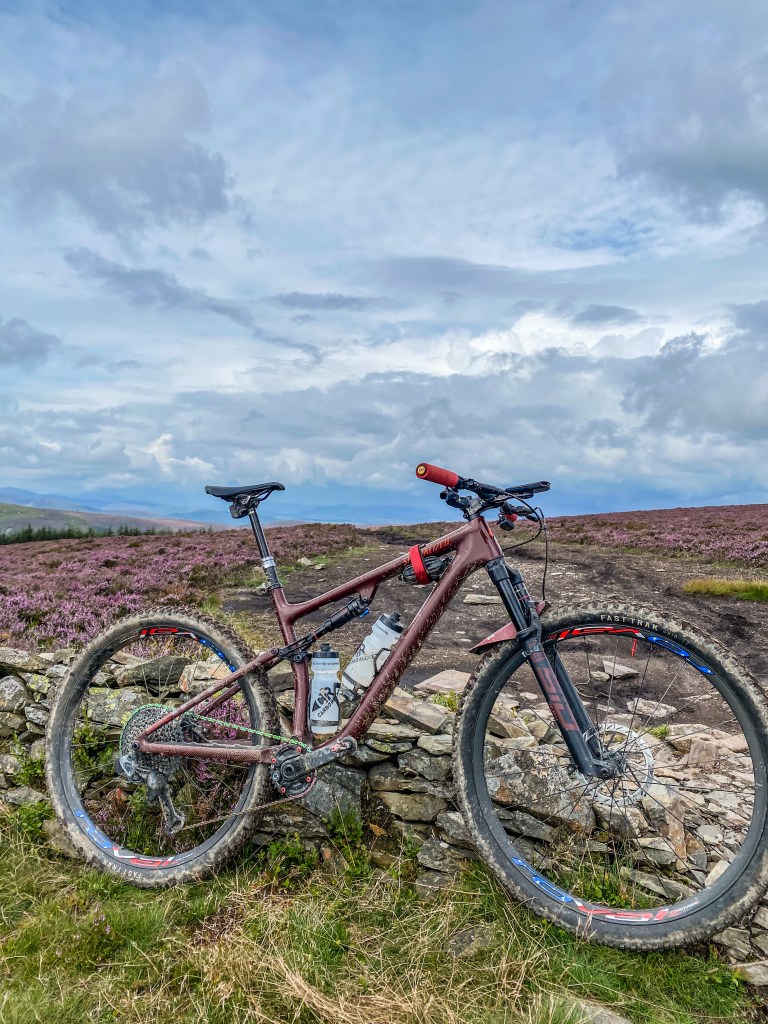
I started 55th out of 62 riders, but promptly got shuffled back in the starting chaos (my least favorite, and probably weakest point in a race). I was in last place starting the first climb, and despite feeling quite decent during my warm-up, felt dull and unable to push the power at all right from the start. Knowing that it was going to be a long and demanding day, I accepted it, and settled in to a steady pace. Slowly, riders came into sight, first a rider with a mechanical, and then others who I slowly, but steadily overtook.
It had rained much of the previous day and overnight, so the trails were properly soaked. On one of the first sections of true singletrack, I caught up with Rachel, a rider from Great Britain who I ended up spending a good portion of the day riding alongside, and we traded positions through the slippery mud, as one, then the other of us, slid out, dabbed, and ran through the deepest sections of mud. Eventually, on my bike and riding, I came up on Rachel and two other riders walking into a steep, muddy corner. My calls of “rider back!” created some movement, but not quickly enough to really open a clear line into the corner—so I came in both hot and sideways, and promptly slid sideways/over the bars in dramatic fashion for all of the spectators on that particular corner (who were surely waiting for exactly that sort of entertainment!), yet still managed to pick myself and my bike up and be on and riding in front of my walking compatriots. It was only later that I realized that I lost one of my bottles of CarboRocket in the chaos—which, with over 25 miles until Aid #3 and any hope of refilling bottles, made me exceptionally thankful that I chose to ride with a pack.
After that one slip-up, I didn’t back off. Instead, I realized just how much of an advantage my descending and technical skills were, and determined to maximize them on every section of singletrack. On the climbs, the riders I passed inevitably caught up to me, but with the exception of one Danish rider, I always caught back up on the descents. Rachel (the GBR rider) and I were more evenly matched on the climbs, and spent several climbs close enough to carry on an intermittent conversation, which was a fun aside from the monotony of pedaling uphill.
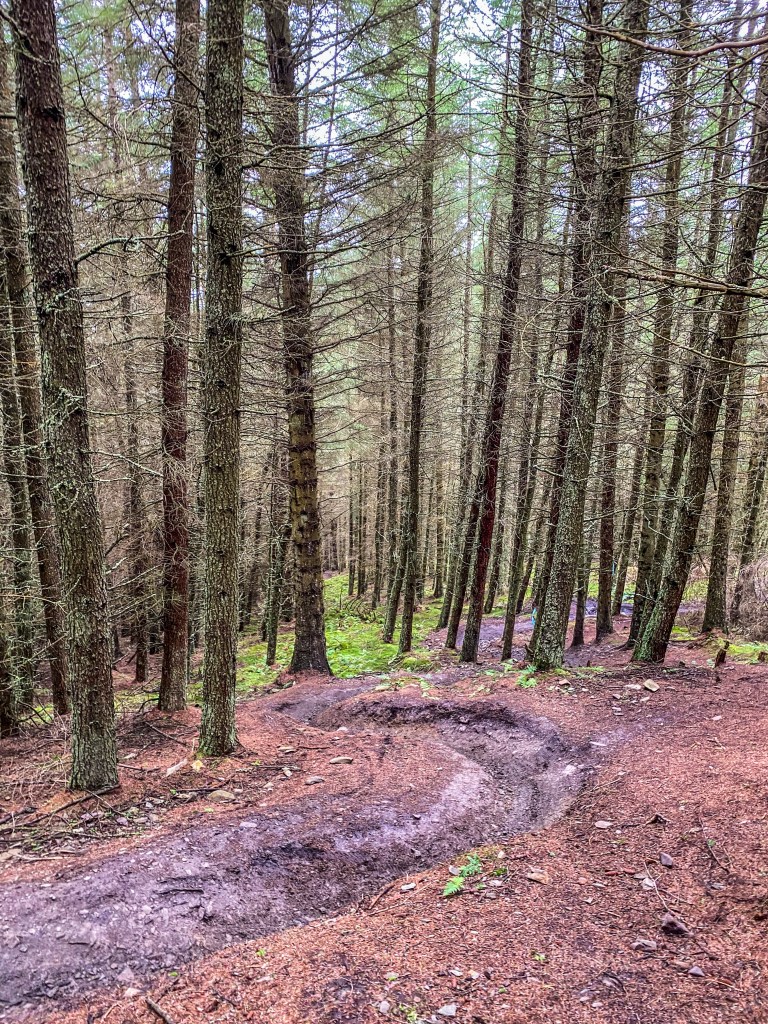
Coming up that same long climb leading to “New York New York,” Rachel got a gap on me when I lost traction and dabbed several times in a row on one of the steeper pitches. I gave everything I could to catch her before the summit to be able to get into the descent first, but just couldn’t close the gap. I caught her about a third of the way down the trail and rode her wheel from a “safe” distance through to the short gravel intermission before the second portion of the descent. I put in a few strong pedal strokes going into the second section of trail and despite the tight trees, wet roots, and mud, have never put together a smoother run—even on far less technical trail. Even as I was riding, I was thinking to myself how good it felt when everything flowed like that, even while continuing to push the pace through the descent. I very nearly cheered when I popped out of the woods at the bottom, and was grinning from ear to ear when I came into the aid station.
It was here that the time advantage of having support on course became most evident. As I was refilling my pack from the neutral water, then picking up the dropped bottles, Rachel came through (admittedly, a surprisingly long ways behind me), was handed fresh bottles, and kept rolling. She was out of sight by time I was back on the bike and riding, and it took me nearly the entirety of the next long climb to catch up to her again. At that point, however, we were entering the Glentress Forest section of the course, which, though it contained one more long climb, was primarily singletrack.
With ~20 miles to go, I embraced every bit of the wet, rooty, singletrack and let the bike go. There was one point about mid-way through the last long climb where I caught a glimpse of Rachel behind me, and doubled my efforts to ensure that I made it to the top of the climb first, knowing that if I did, I’d be “home free.” The GoPro videos I took during pre-rides were helpful, as some of the poor line choices I’d made on first sight were emblazoned on my memory, and I was able to avoid them and make smoother, faster choices during the race. It was also helpful to have ridden the entirety of the last 10 miles and know what was remaining in the race.
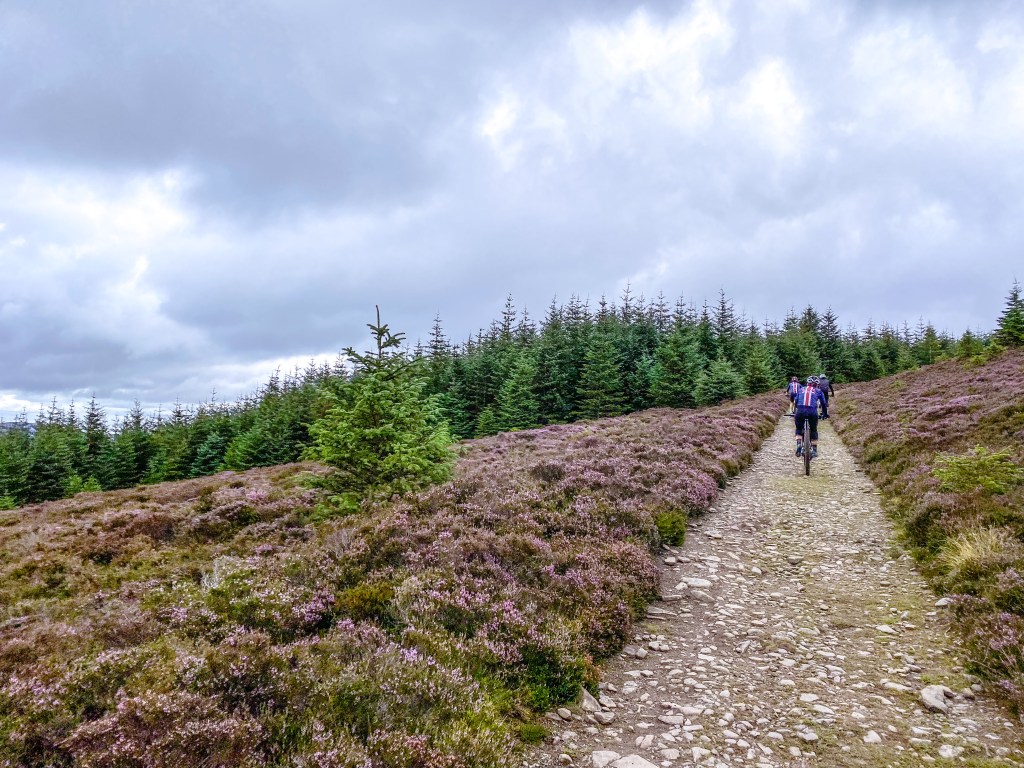
On the last short climb, I caught a glimpse of the Danish rider whom I had traded places with on the singletrack where I crashed and then on the climb following, nearly 45 miles earlier. Unfortunately, she happened to look back and see me with enough of the climb remaining that with her additional effort (and strength climbing), I wasn’t able to catch her on the climb, though I certainly tried—then gave everything I had to catch her on the last descents. The finish stretch included a short singletrack descent, a groomed flow trail, and one final somewhat-awkward singletrack-flow trail-single track combination. Despite pushing to all the limits on the descent, the Danish rider was crossing the line as I came into the final corner to the finish—I couldn’t quite make up the gap.
Still, when the announcer called my name as I crossed the line and said that I had finished in 49th place, I was celebrating. I never felt truly “strong” the entire day, but still strung together the best descending of my life, and rode the absolute best XCM course I’ve ever seen—and had fun doing it!
At the finish, I was met by one of the families from the Roanoke Star Cycling junior team who just happened to be in Scotland visiting family for a summer holiday and made the effort to come out for the race, as well as a dear friend who I had spent several years with in Tanzania who came down from Edinburgh for the weekend and to watch the race (and who isn’t even a mountain biker, but still stood in the rain all day to watch me finish!). Yet another sweet testimony of the incredible people in and around this sport!
In short, the XCM World Championship race was perfectly rowdy and perhaps the most fun I’ve ever had racing! All I had to do was ride my bike, and ride my bike I did!
Thank you to everyone who cheered me on and supported from afar—you all ROCK! I may have been slow, but I had fun—and hopefully that represented you well enough!
 Ride Fierce Racing