That title sounds like I’m about to write some kind of self-help blog, not a race report, but c’est la vie.
One of the mantras (in addition to the ever-present “stay curious”) that I’ve added to my top tube this season is “Balance.”
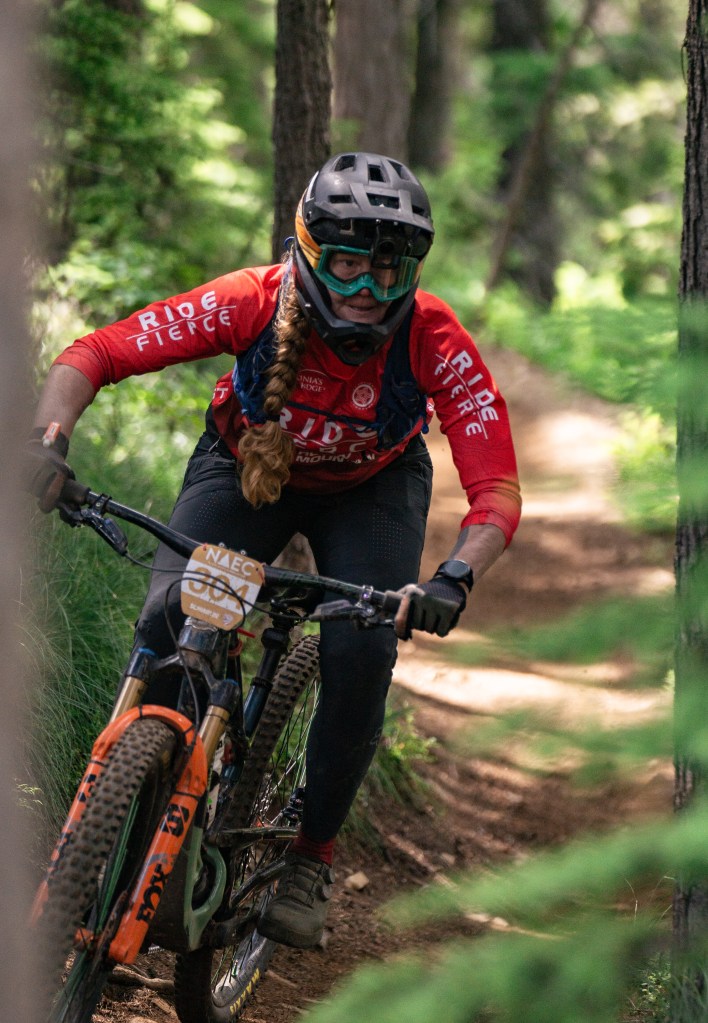
In one of my skills lessons earlier this season, Harlan (of Take Aim Cycling) helped me make the shift from thinking “centered” to “balanced.” Honestly, either is correct, but in my mind, “center” was a much more locked-in position, and we have been working on my movement “outside the box” while still staying balanced on the bike. So, now, as I enter technical sections or approach a feature on the trail, I remind myself to find balance, even if that might not “look” centered (in reality, it probably is both…but my brain doesn’t always think logically about these things).
Over the last month, I’ve been be-bopping around the Pacific Northwest, riding new trails, visiting friends, and riding more trails. It has been exceptionally fun, but also challenging, as I am almost always faced with unknown trails and features–and riding “blind.” I keep thinking that maybe, once it all “sinks in,” I’ll be a much better rider for it–but for now, it still feels a little like drinking out of a fire hose.
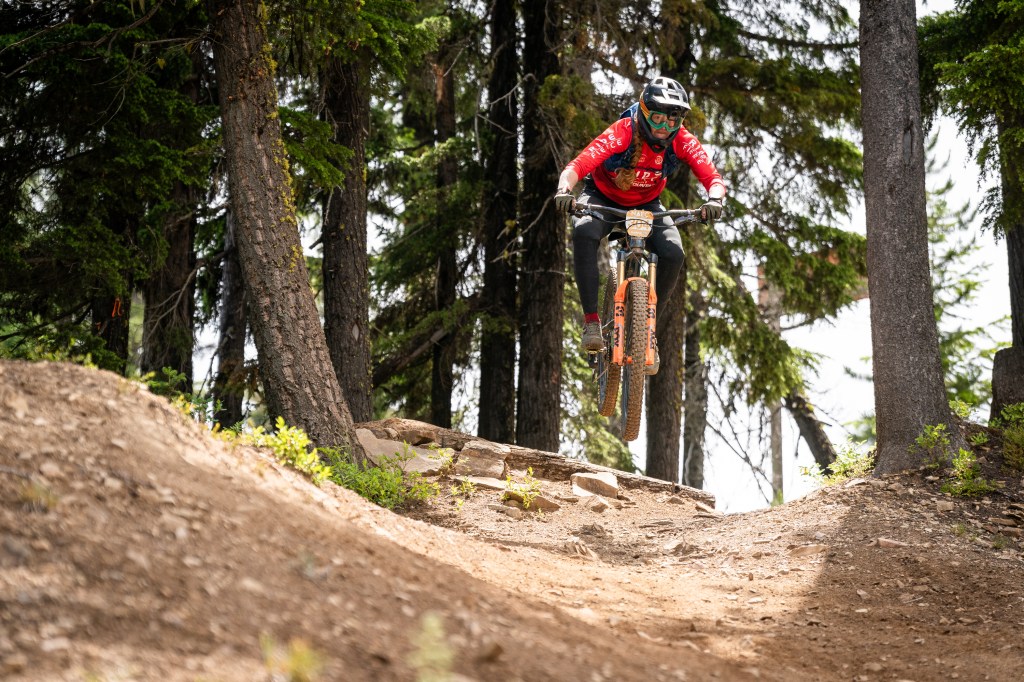
In the week leading up to the 2025 North American Enduro Cup (which is also, for this year, the USA Cycling Enduro National Championship), I rode at Whistler, Pemberton, Revelstoke, and Nelson as I made my way across British Columbia towards Kellogg, Idaho and Silver Mountain Resort. It felt a lot like work, ride, drive, sleep, repeat, and though it was totally worth it to be able to ride so many incredible trails, it left me exhausted.
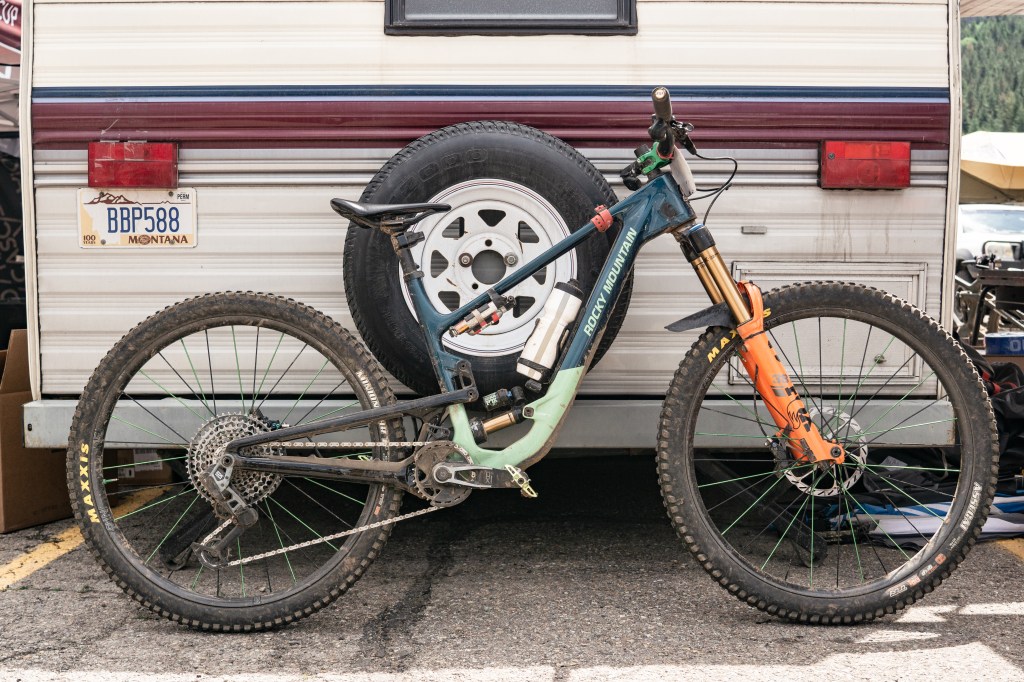
Just before riding in Nelson, BC, three days before the start of the race, I flipped my enduro bike upside down to check the status of my brake pads and realized that the carbon on the bottom of my chainstay was cracked (I also needed to replace my brake pads, but that became a secondary concern). Though the problem-solving neural pathways probably resembled a spiderweb, the eventual solution that I landed on (with the help of friends) was to have the rear triangle from my warranty frame (long story, but me and carbon bikes and rocks don’t always get along and I had a warranty frame waiting for me at a shop in West Virginia from a previous incident) overnighted to Idaho, where it would arrive mid-day Thursday, and I would be able to have a new rear triangle prior to pre-riding on Friday or the weekend of racing.
After confirming that the new rear triangle was headed my way, I chose to ride in Nelson, cracked chainstay notwithstanding. My initial observation led me to believe it was cracked, but not too badly, and my best guess at when I had broken it was during a minor crash at Whistler, 3 days and as many rides earlier. Post-ride, chainstay still as-intact as it had been, I started the drive south to Idaho from BC.
Thursday afternoon, after repeatedly checking the tracking info of the box with my replacement rear triangle in it, it became evident that it was not arriving “by 2 p.m.” as expected–and would not likely arrive on Thursday at all. This complicated things, as Friday was designated for pre-riding, and I certainly did not want to race this event blind.
Thanks to the ingenuity of a friend, I gathered some epoxy and gorilla tape from the local hardware store and proceeded to reinforce the broken chainstay with plans to pre-ride as much as possible on it until the new one (hopefully) arrived on Friday. The only complication to this plan was that the shipment required a signature upon delivery, and UPS would not let myself, the shipper, or the named recipient change that despite multiple requests–and, with attempting to pre-ride, it was impossible to monitor the delivery with “before 7 p.m.” as the only ETA. Still, I couldn’t afford to just wait around, so we left a note for the delivery driver to leave it regardless of prior instructions, and headed out to pre-ride on Friday morning, hoping for the best.
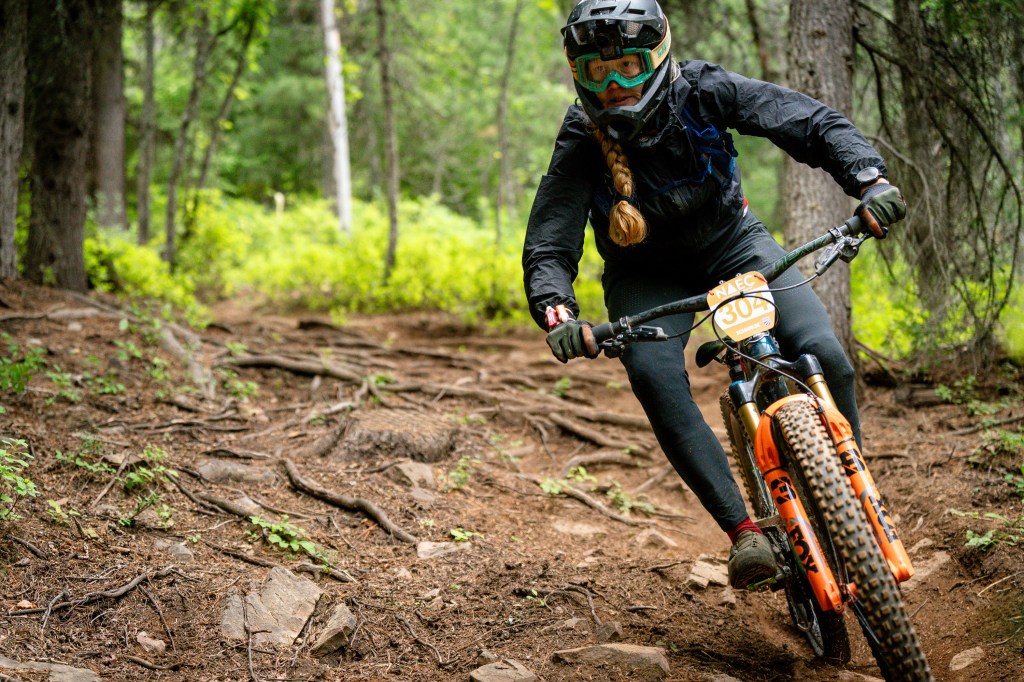
The North American Enduro Cup is a unique format among U.S. enduro races, as it is a 2-day event, with five stages the first day and two stages the second day (one of which is a top-to-bottom run that is nearly 4 miles and 3,300 feet of descending). Taking place at Silver Mountain Resort in Kellogg, Idaho, the stages are comprised of a mixture of fresh-cut “loamers” and park trails, giving riders a full-spectrum experience of flow, tech, berms, switchbacks, drops, rock gardens, rock rolls, and jumps. Because the non-park trails are only open for pre-riding on the Friday just before the race and the course isn’t released until Thursday at 8 p.m., riders must pre-ride everything on Friday, which makes for a big day on the bike to start off the weekend of racing. Spoiler alert: I LOVED the physicality and expansiveness of the two-day format!
After our first lap pre-riding, where we managed to string together two stages, I checked the delivery status to find that yes, my rear triangle had arrived! I detoured on the way back to the gondola to pick it up, and called the local bike shop en route to see if they would still be willing to do a brake bleed that afternoon if I managed to get it there an hour or so before close. (Shout-out to CDA Bikes Kellogg–they were absolutely fantastic!). With that arranged, I hurried back to the gondola to try and squeeze the rest of the stages in before returning to the shop to “rebuild” my bike.
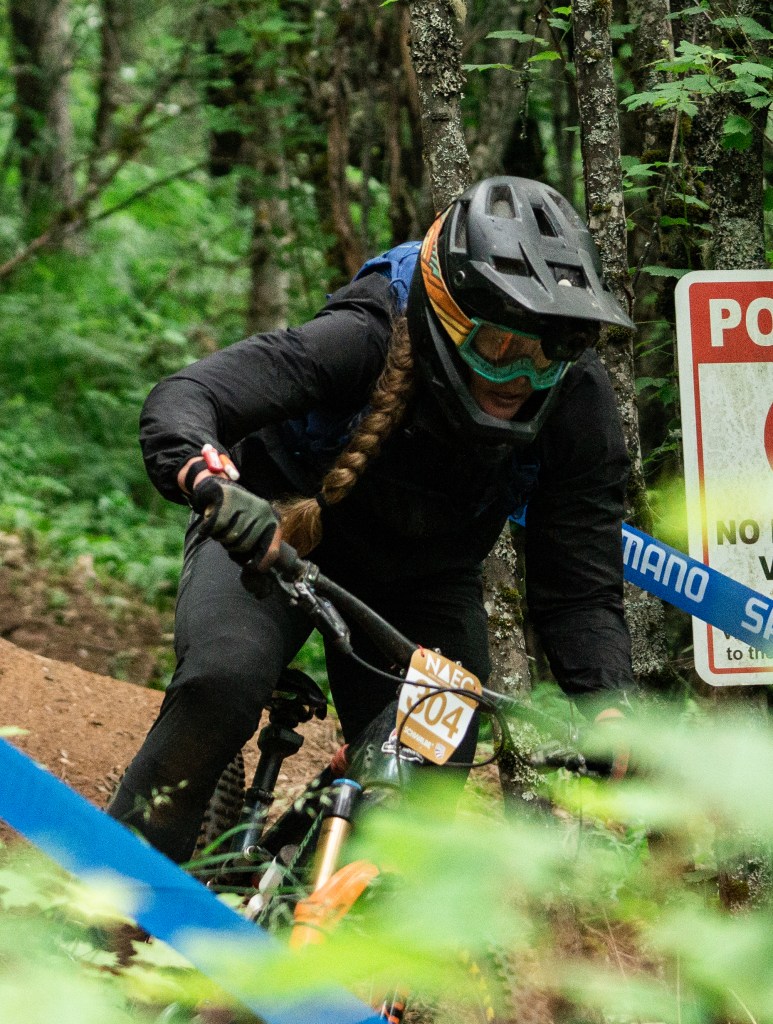
Though the “optimal” way to pre-ride (in my opinion) would be to take time to check out lines and challenging features, I felt hurried by the need to get to the bike shop by 4 p.m. to get the brake bleed (though I had a bleed kit and have done a few brake bleeds in the past, I really didn’t want to have to do that in the parking lot after being cold and wet all day). As a result, I essentially “rode through” each stage, only stopping at the most awkward features, and even then, stopping, looking, and making the in-the-moment decision to ride or walk it and get on with the day. Having done Stages 3 and 1 before getting the rear triangle, I made my way to the top of the mountain for Stage 6, then Stage 2, which had some A/B line options that I was intrigued by, but didn’t really have time to go back and check out. Then came Stages 4 and 5, which, looking back, I should have done earlier in the day. By time I made it to Stage 4, I was severely underfueled, having neglected, in my stress over the cracked rear triangle, to eat hardly anything all day, and feeling pressured to finish in time to get back to the bike shop. When I rolled up on the first of three pretty big (at my skill/experience level) rock features, and almost immediately watched several riders eat dirt on their first attempts, my over-stressed brain checked out. Even though I saw what I felt were feasible lines that were within my skills (even if on the limits), I wasn’t able to commit. I walked the first two features, despite rolling up on each of them several times, and then found a B-line on the third (and didn’t even look at the main line), and hustled to finish riding Stage 5 and get off the mountain in time to make it to the bike shop in time (leaving Stage 7 to be ridden blind on Sunday).
Though my original plan was to swap the rear triangle myself, then just get help with the brake bleed, I was running late, so just took everything to the guys at CDA Kellogg. They double-teamed it and had me up and running within an hour. Absolutely amazing!
Once my bike was in full working order, I settled into a more normal pre-race routine: watching the GoPro footage I had taken of each stage (except Stage 5, because my battery died only seconds into the stage) and making notes for what I needed to remember for each of them.
Because the features on Stage 4 scared me so much, and because I had not ridden any of them (only walked), I also reached out to Harlan (skills coach) and Erin (sports psychologist) for their advice going into the race. Harlan, despite being on vacation, graciously responded, and was able to give me some additional cues to focus on position and execution over drops, and Erin reminded me to stay curious and give myself grace through that section of trail.
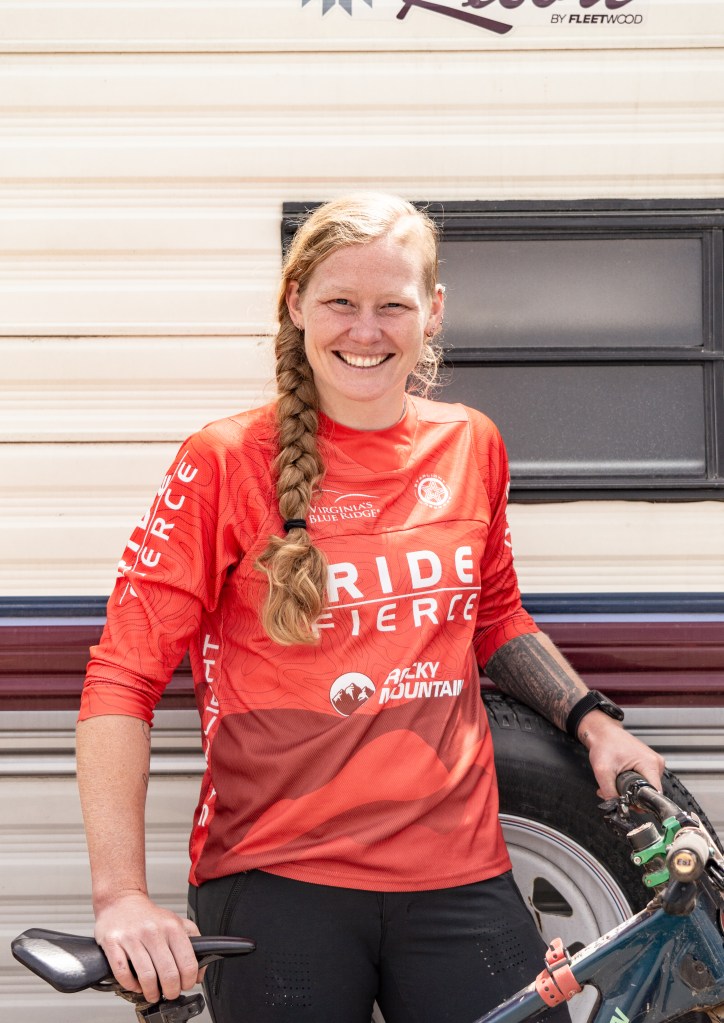
On race day, the rain finally let up, and it was marginally warmer (perhaps only because it wasn’t raining, and we started the day with a 1,800 foot climb?). Like last year’s Enduro National Championship event, the pro women were all started as a group, which gave us the opportunity to chat as we climbed up to the first stage. It was fun to reconnect with women I knew from past races, as well as meet a ton of other racers from all over the U.S. (there were 16 women in the pro women’s field–by far the biggest field I’ve been a part of!).
Stage 1: I bobbled a bit towards the top, perhaps not fully warmed up into descending at speed after the long climb, but settled in towards the bottom.
Stage 2: A short stage, with a massive (>8 foot) drop A-line that I didn’t ride in pre-ride and that a lot of people said was easy to overshoot and land flat. I knew the B-line would cost me time, but I was only 50% ready to hit the drop, so went B-line and otherwise kept it relatively smooth (side note: I’m actually proud that I even considered hitting it; in the past that would have been a 1000% no-go for me).
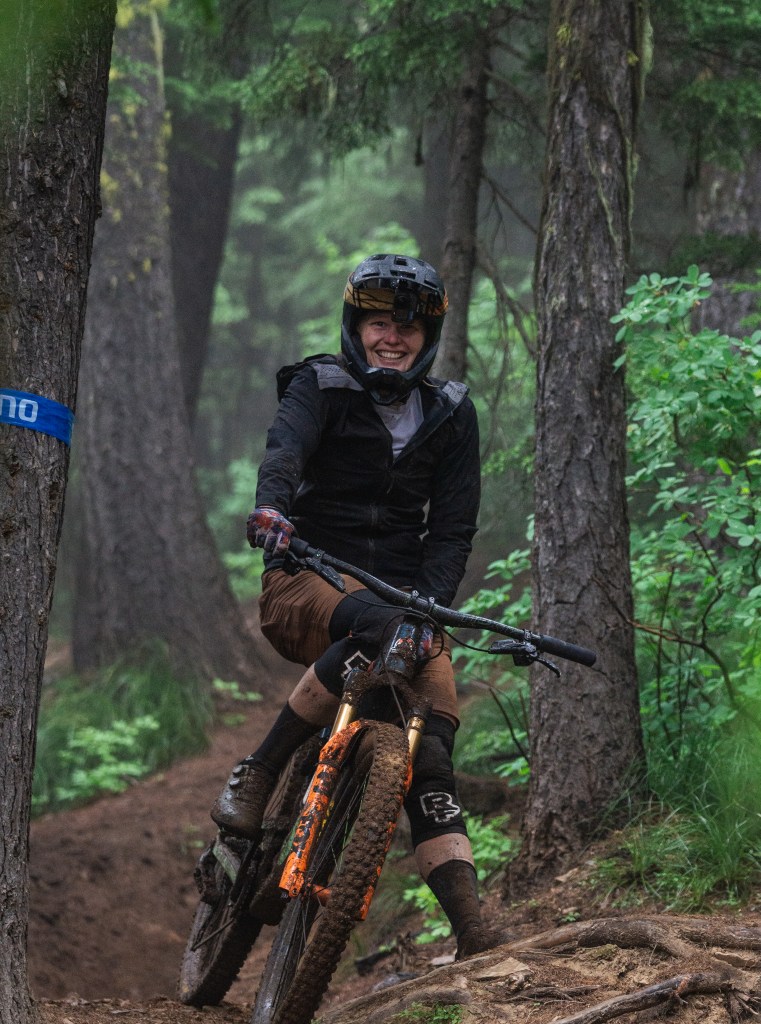
Stage 3: My favorite trail during pre-ride, but I fell off the trail when letting another rider past, then promptly lost the front end in a corner about 100 meters further down the trail (and lost my pump–sad day!). Not my smoothest run, though still a PR over practice.
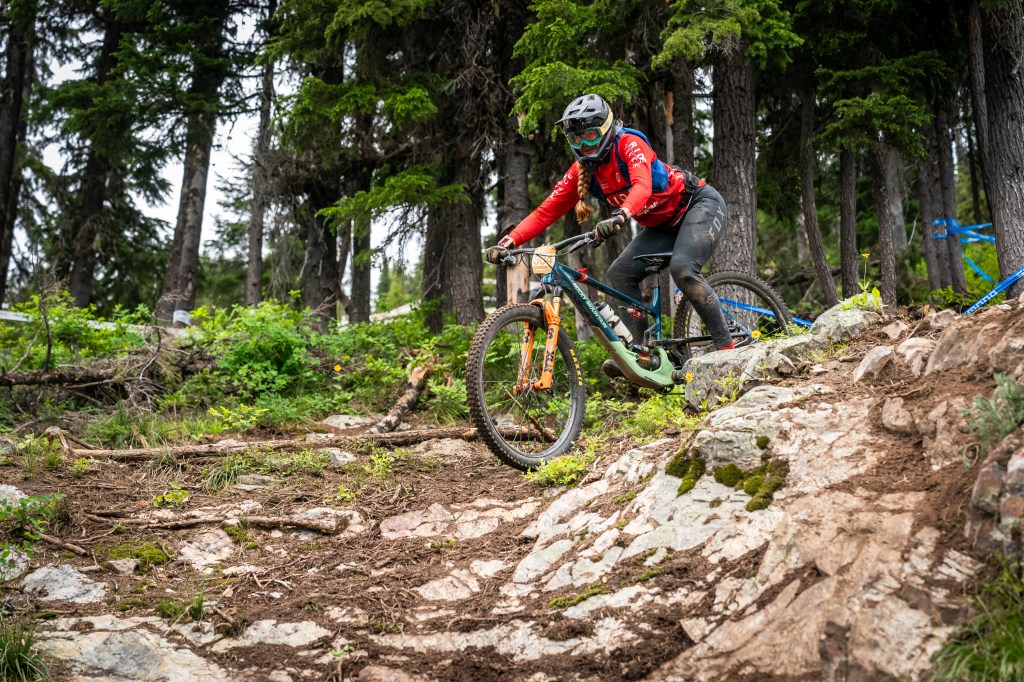
Stage 4: The stage I was dreading all day. I came into it, expecting the rock feature way before it actually was on the course, so probably lost some time braking and anticipating, but despite a less-than-direct line in, rode the slabs on both the first and second features, then, having not even looked at the third feature, opted for the B line again. I finished the stage SO STOKED to have ridden the entire thing. WIN.
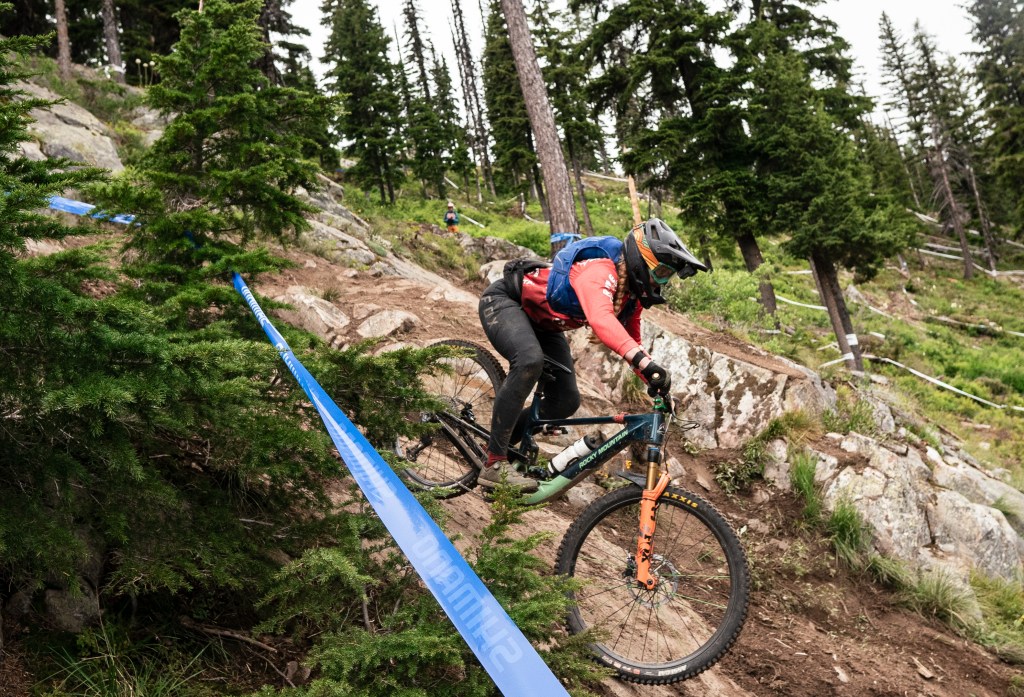
Photo Credit: @sour_beer
Stage 5: There is another long, chunky climb heading to Stage 5, and I felt better on this transfer during the race than I had on pre-ride (its amazing what fueling the body can do!). After riding on dry roots all day, I took a wet root slide right into a tree towards the top of the stage, then dabbed a bit through the chunky scree field towards the bottom, but otherwise felt relatively smooth (as smooth as possible while grabbing brakes through a downhill boulder garden?).
With Day 1 complete, I chipped in, and learned that in addition to riding all of Stage 4, my goal of “not last” was also met. I was sitting in 15th out of 16, which, although disappointing, was “ok” considering the stress of the week, the lack of careful pre-riding, and the burliness of the stages.
There were just two stages for the second day, and I started up the mountain early in order to avoid waiting in a line at the top (which was effective, but then I ended up waiting in the lodge before the second stage, so, meh):
Stage 6: I managed to ride this stage relatively smoothly, though I bobbled a bit on a wet off-camber log that I attempted to “tripod” over rather than just hopping and risking a crash, and then fell off the outside of a berm when I attempted to step off the trail to let another rider past. It’s racing–but I feel like I could be better at finding spots to let riders past where it doesn’t cause me to fall in the process.
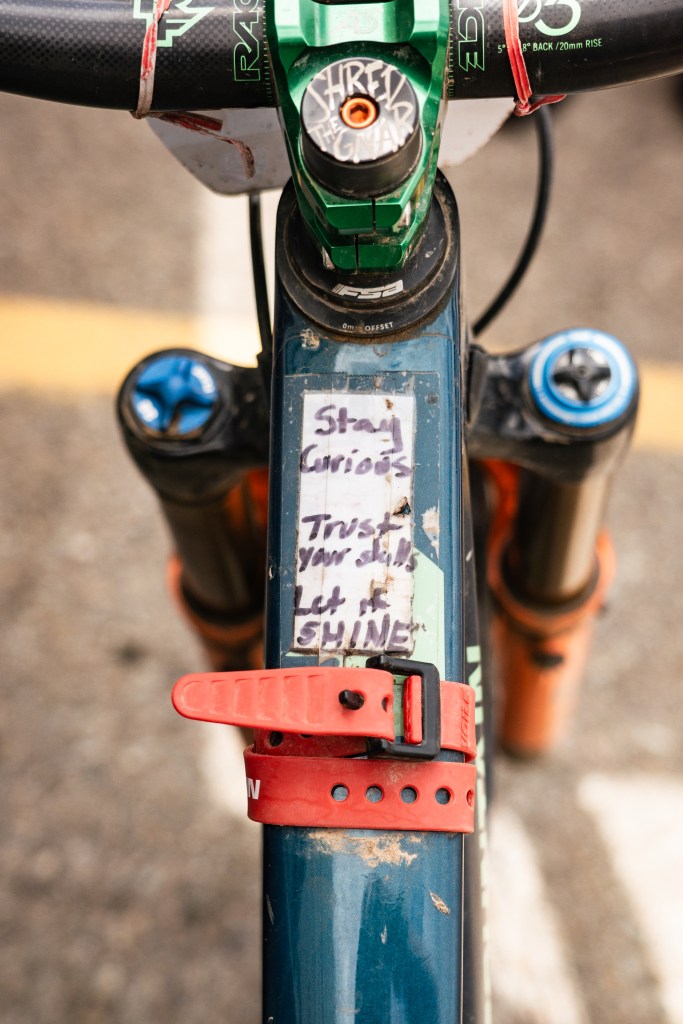
Stage 7: This was a top-to-bottom stage, and one I had only ridden sections of (where it happened to intersect with the route down the mountain from earlier stages). Even at the start of this 4-mile, 3,257 feet of descending full-pull stage, my hands were completely dead. Though I had the legs to push, I really was just hanging on and hoping my hands could keep holding onto the bars. I did make it down, but definitely not quickly… it was more of a party-pace lap. Oh well. Better next year?
In the end, I maintained my next-to-last spot, placing 15/16 for the North American Enduro Cup, and 13/14 for the USA Cycling Enduro National Championship.
Though I would have liked to have placed higher from a results perspective, I also realize that with only two years of experience racing enduro (and exclusively on the East Coast and splitting time with XCM), I just don’t have the comfort level with the speeds and size of some of the features that this particular race demands. While, yes, I had some bobbles and falls that were preventable, I also am very proud of the way I rode and the improvement upon my riding and racing last year is visible. That being said, I’m motivated to keep improving, and already have a list of things that I felt were weaknesses or gaps in my riding that I want to work on through the rest of the season to better prepare for future races / next year.
All of that aside, what I am most proud of is that I feel like I found balance this race. Not in a skills or body position way, but in my mindset. Over the last year or so, my mindset towards racing has been in an evolution, where though I realize the pressure and anxiety that performance-related outcome goals create, and enjoy the freedom that racing with a community-focused mindset provides, I also want to be competitive and race for a podium position or a win. Letting go of performance goals entirely isn’t the answer, but neither is focusing on them exclusively.
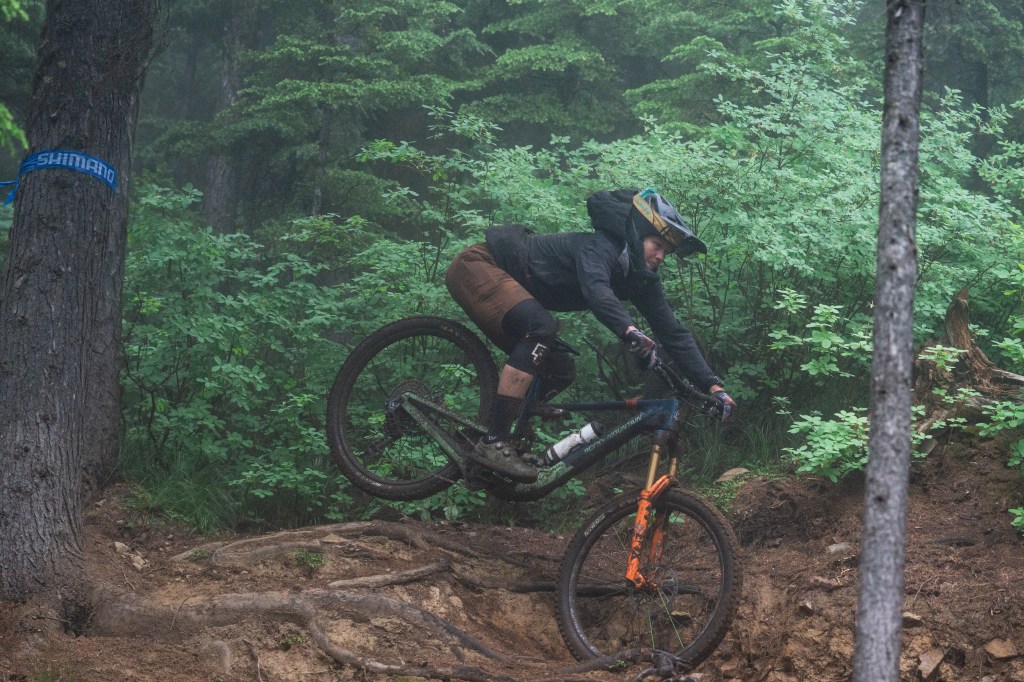
Perhaps due to the sheer physicality of this course, I felt like performance was distilled down into stringing together individual stage performances, and that those were as much dependent on how well I could execute various skills as anything else. So, in between the stages, I chatted with other racers and focused on the social aspect of enduro racing, and tried to let go of any performance-related thoughts. Then, as I lined up for the stage, I would check my notes, center my thoughts, and get into “race mode.” For this race at least, that seemed to prevent the pattern of over-thinking mistakes made in previous stages creating anxiety on stages yet to come, and, had the unexpected benefit of making several new riding homies!
I’m not so foolish as to think that finding balance in the fun-performance spectrum on this race will translate perfectly to future races, but it gives me hope that I can still have performance goals while simultaneously embracing the fun and community that brings so much life to bike racing.
 Ride Fierce Racing