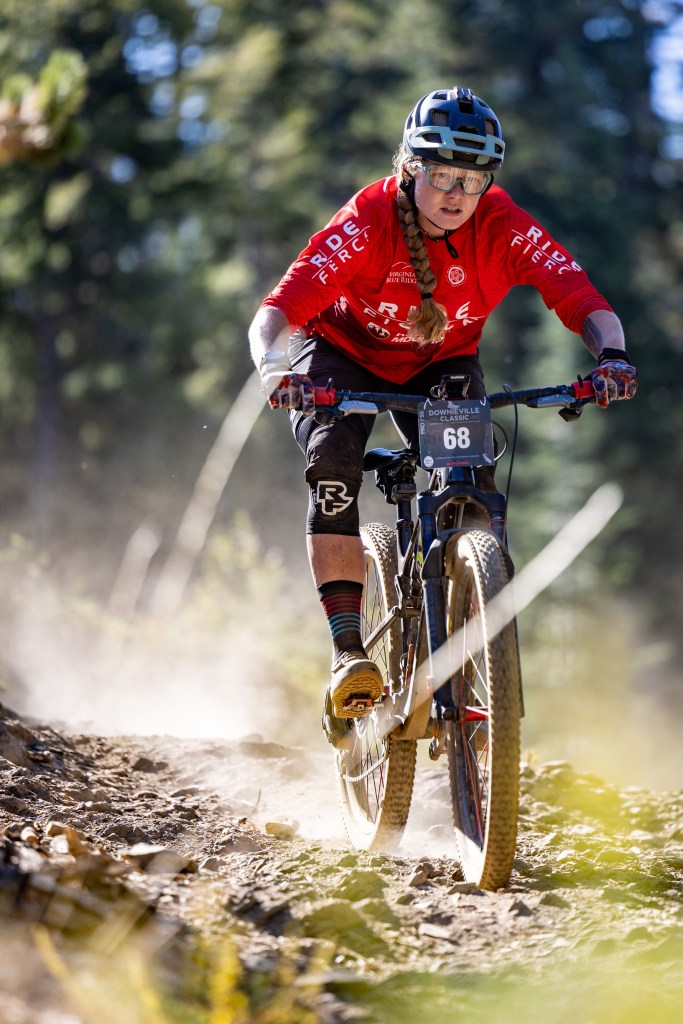
I don’t really remember how I first heard about The Downieville Classic, but somehow, back in Indiana, when I first started racing mountain bikes, there were three “big” races that I quickly learned about: Iceman, Leadville, and Downieville.
I’ve raced Iceman numerous times over the years and plan to make the trip from Virginia again this year for the best bike party in the Midwest, have zero interest in racing Leadville (to me, it’s significant only for it’s history, but as a sea-level resident, seems challenging at a level beyond the furthest reaches of “fun”), and Downieville always intrigued me, but felt impossible to get to.
Going into this season, I decided that Downieville was going to be the one bucket-list race that I made a priority for 2025. The all-mountain format of racing XC on Saturday, then “DH” on Sunday, and combining the overall points sounded like the perfect fit. When the race organizers offered an ambassador program to reduce the costs, I immediately applied, and was ecstatic when I got in.
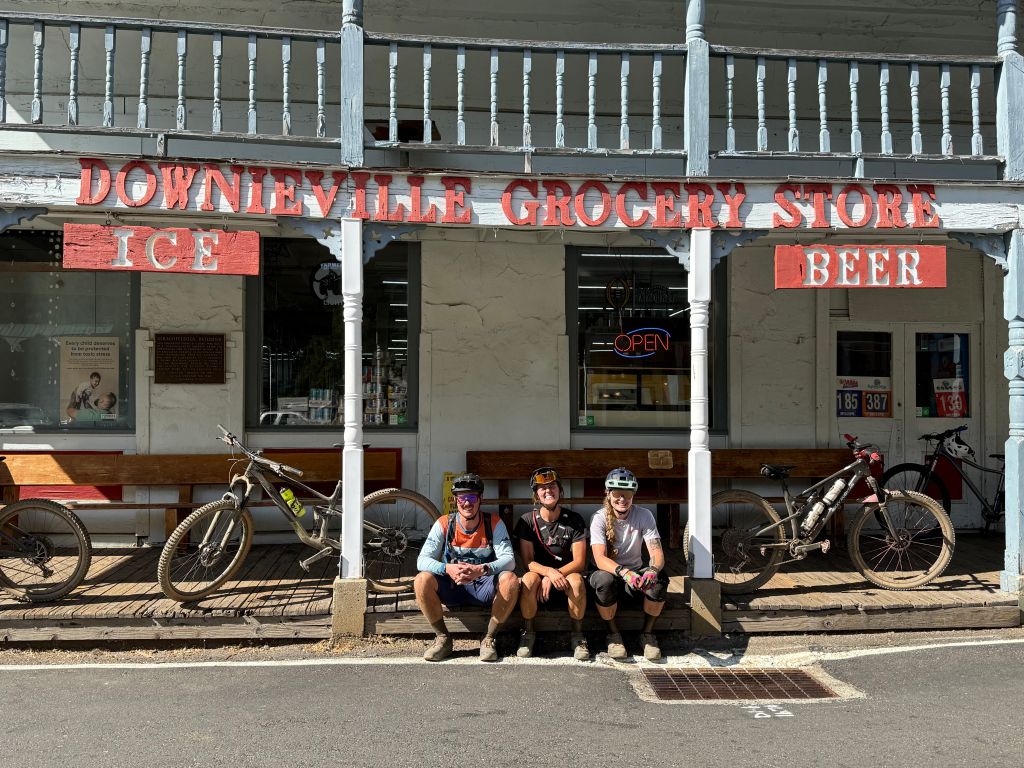
Logistics
Flying to the opposite side of the country for a race where camping is the primary form of lodging is definitely a bit complicated. Part of the ambassador program benefits included being able to camp in a field near the venue, so finding a place to camp was taken care of for me. However, it still took a bit of work to figure out how to pack necessary items for camping (along with what I needed to be able to work remotely for several days). Here’s the highlights of what worked–and what I’d do differently:
- I chose to camp in the back of my rental car vs. fly with a tent. I brought my lightweight sleeping bag and sleeping pad and a small pillow, and was pleasantly surprised that my bags (while the bike was still packed) and myself all fit comfortably in the rental Subaru Outback. I also brought my Luno car window screens, which allowed for some airflow without letting bugs in (speaking of bugs–I didn’t expect mosquitoes in dry California, so ended up buying bug spray!)
- The fans I use when car-camping in my own car were too large to fly with. I should have bought a small battery-powered fan, as getting to sleep when the car was still in the 90s was challenging.
- I flew with my Starlink Mini and its standard power-adapter, as well as a USB-C cable, and two small solar battery packs. Fortunately, there was a power outlet in the field where I camped, so I could power up the Starlink from that, as I discovered the small battery packs aren’t powerful enough to run my Starlink off of. This is something I need to figure out better for future trips where I might need to work remotely when flying…
- Downieville itself (only in town, not anywhere outside of town) actually had more cell service than expected and the coffee shop in town, though hours were limited, did have pretty consistent wi-fi, so I probably could have gotten away with tethering to my phone and/or hanging out at the coffee shop for work while in Downieville. (The coffee shops in South Tahoe actually had worse and/or not-free wifi, which was a bit more unexpectedly challenging–and because of my inability to power my Starlink, it meant I worked within the confines of limited wifi and/or phone tethering while there, rather than being able to hang out at the trailhead and work.)
- I flew with a full-sized floor pump because my hand pump is notoriously unreliable these days (too much dust gets in it) and way too slow if I had needed to change tires. I also neglected to fly with a CO2 inflator, so even if I had purchased a CO2 cartridge locally, was limited to said unreliable hand pump if I had happened to flat on-course (thankfully, I didn’t). In the future, I think I’ll invest in one of the tiny battery-powered pumps to save on both time & luggage space. Also worth noting, there is a bike shop in Downieville, and Shimano was on site with their tech support.
- Camping without a cooler or camp-cooking supplies (namely, a stove to heat water) is challenging for sure, and meant I stuck to eating mostly non-perishable food items for most meals, then usually got one meal in town (as well as cold drinks, as I very quickly got tired of lukewarm water). Coordinating to camp with/near a more local friend who has these amenities would be convenient, though this week is proof that it is possible to go without. (Though I did miss my coffee, and was very grateful for one camp neighbor who offered coffee several mornings!).
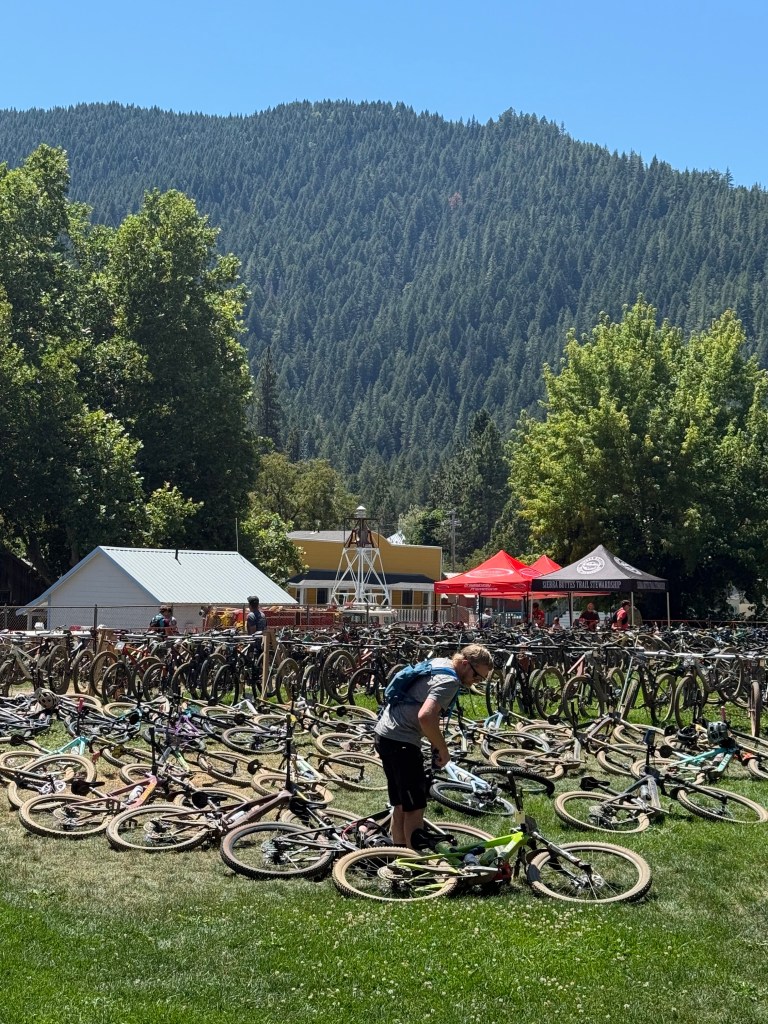
Bike Set-Up
One of the unique (and cool!) things about the Downieville All-Mountain race is that you have to race both the XC and DH events on the exact same bike. The bike is weighed before each event to prevent any changes being made (gears, tires, suspensions, etc.). Having only minimal course knowledge, I was pretty confident that the Rocky Mountain Element would be the perfect bike for the course. I was less sure about what tires to run, having never ridden in this part of the country before.
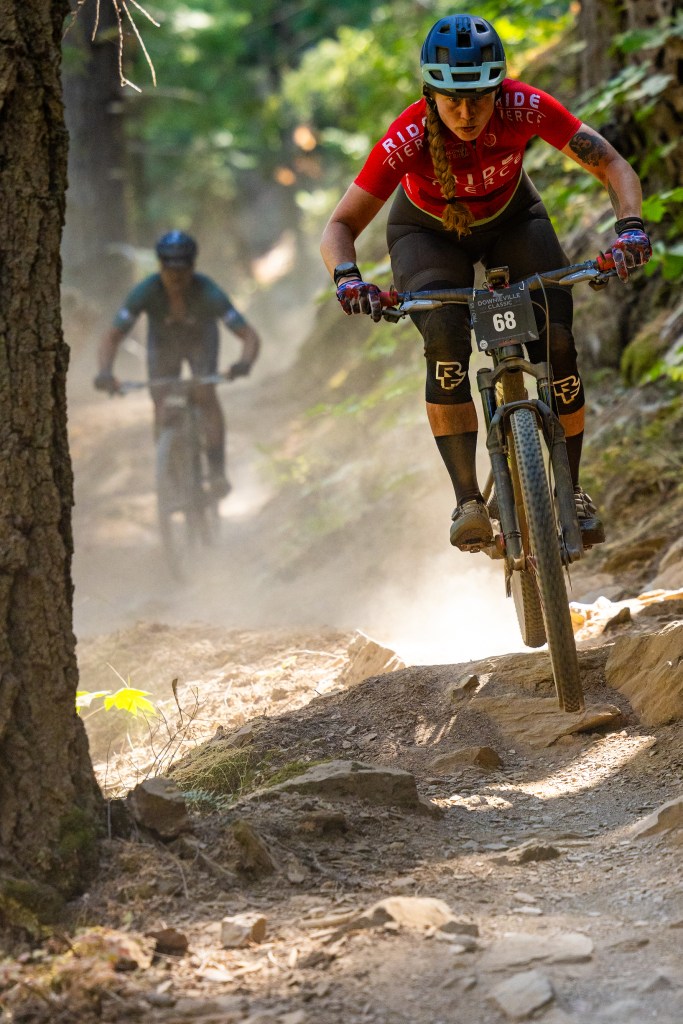
I ended up polling several friends and researching tire choices by past Downieville winners and settling on the Maxxis Forekaster (front) and Maxxis Rekon (rear), both in EXO casings. The benefit of running burlier tires than usual is that I had traction for days and didn’t have any issues with flats (does more knobs mean less likelihood of flatting? I’m going to believe that…). At the same time, I think I could have easily gotten away with a Rekon / Rekon Race combination, which would be faster-rolling. Either way, I’d stick with running CushCore in the rear (and maybe add it in the front for this race?) and of course, Black Ox sealant (I know for a fact I ran through a thorn bush on one of my rides after the race, and my tires are still holding air–credit to Black Ox for that!).
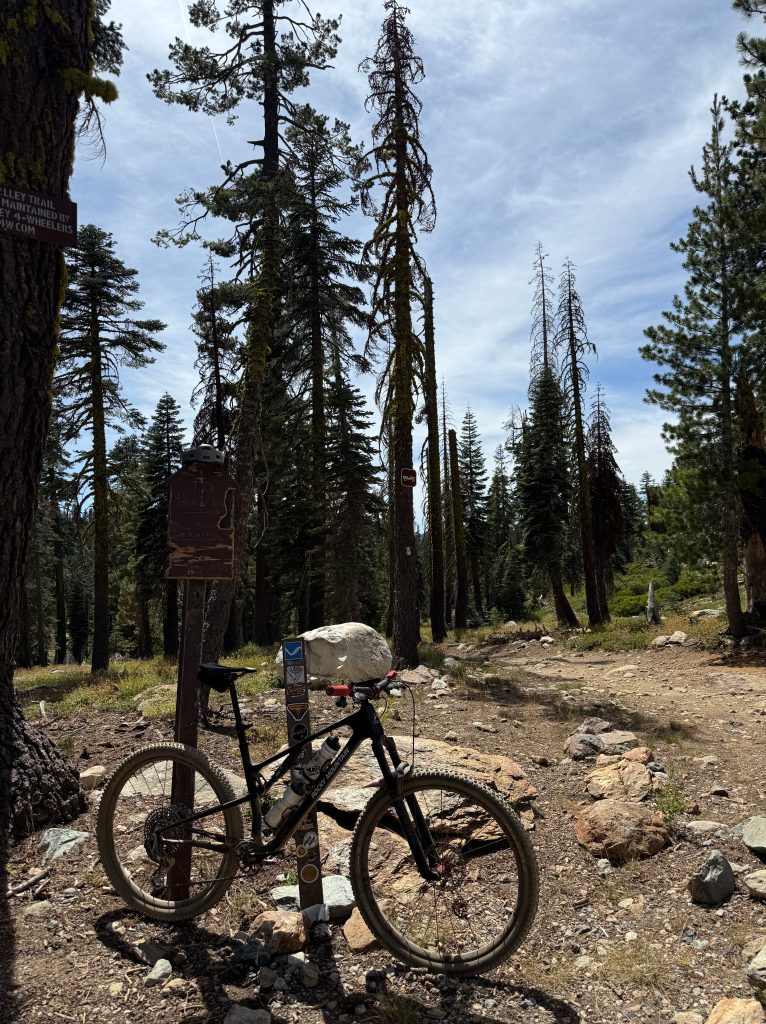
Otherwise, my bike set-up stayed the same as usual. It’s what I have, so it’s what I ran. I was super happy (as always) with my 130 Pike Ultimate up front and the 120 Sid Luxe suspension working overtime in the rear. (The local suspension tech who does my service always tells me how much my Sid Luxe is overheating from the rowdy riding–but overheating or not, it’s a damn good shock and provides the pedaling support I need.) I run a 180mm Reverb AXS dropper, and a XO Transmission (11-52t with a 32t chainring) drivetrain. Part of me wonders if a 30t might have been helpful on the climb as I struggled a bit with the elevation, but at the same time, my experience riding singlespeed tells me that if you have a big gear, you just have to turn it, and therefore you’ll go faster (as long as you’re not walking) than if you have an easier gearing.
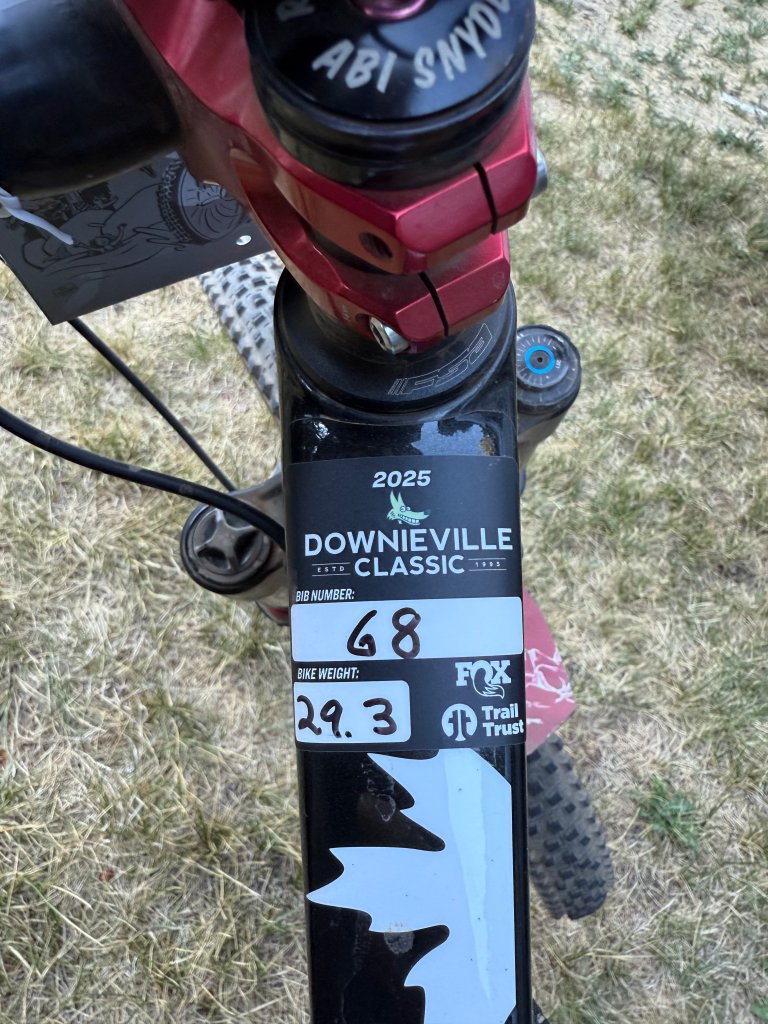
Oh, and for those of you wondering, my bike weighed in at just over 29 lbs, which was pretty mid-pack from what I saw of other riders’ bikes.
The Race
The XC race is a point-to-point course, starting with an ~8 mile, 3,000 ft gravel road climb out of Sierra City, before dropping into a ~14 mile descent back to Downieville. One big climb, one big descent. Having pre-ridden the descent (thanks to a shuttle up to the top), I knew that the descent actually included several short climbs, so was prepared mentally for that. I had not, however, ridden the climb before.
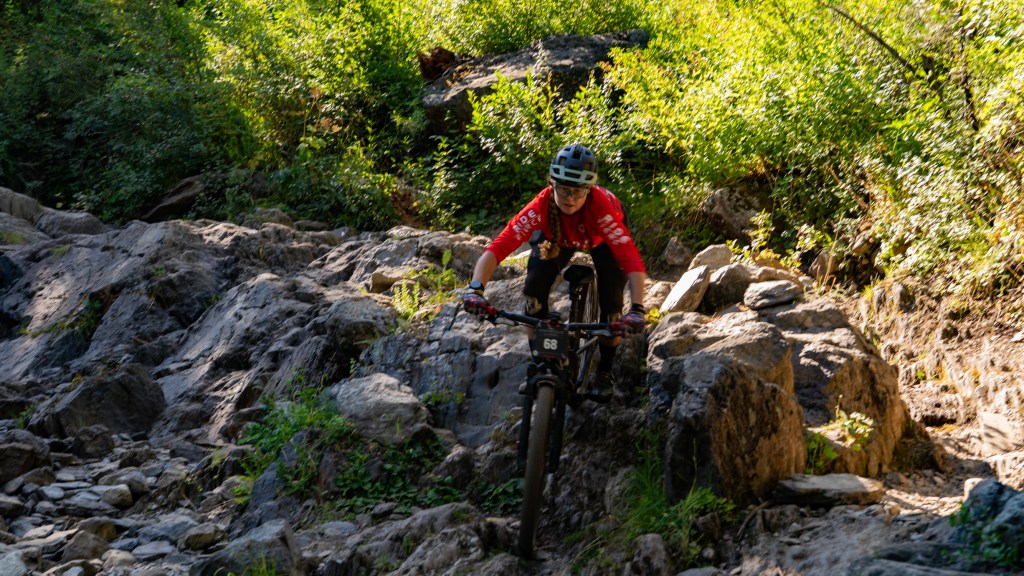
Even though the race starts at just above 4,000 ft elevation, which is not actually that high, I was able to feel it (or it, and the combination of super dry air, which had been plaguing my sinuses since arriving in Reno). As a result, I knew I would not be able to dig super deep on the climb and maintain it for the full 8 miles, so I settled into a pace I thought I’d be able to manage fur the entire climb early, and worked to stay steady and lose as little time as possible. Despite starting early, it was still scorching for the first ~5 miles of the climb, and I was incredibly grateful when there was an unexpected (for me) break in the grade and shade after the first aid station.

Once we crested the top at Parker Saddle, I was in familiar territory and tried to pick up the pace and find my rhythm going into the descent. It starts out with a loose but flowy section of trail with a lot of berms and whoops, then opens up into another gravel section for a bit (with more climbing), before dropping into the infamous “Baby Heads” section of ATV trail. This is where I opened it up and made up some of the time I’d lost on the descent. A moto guy (who I later learned was a Downieville local and somewhat of a legend) was off to the side yelling “no brakes”, which was exactly my strategy. Despite the loose larger-than-baby-heads rocks, I took the “speed is your friend” approach and just straight-lined it, passing several riders who were trying to mince their way through the rocks awkwardly. From there, it was back into singletrack, much of which was bench cut and narrow, providing only a few options for passing. Eventually, fellow enduro racer, Kate Lawrence, caught me as I expected she would (she’s definitively a better descender than I am), and as I let her around, I also determined to try and stick as close to her as possible. There is a climb just after the half-way point of the descent, and it was there that I caught her again, and determined to give it every bit of energy I had to pass, get a small gap, and hold that gap as long as possible. Several miles later, I bobbled on a small rock step, and she passed me again, but with a rider in front of both of us, was not able to create a gap. From there, I hung on for dear life, knowing that if I could be on her wheel when we hit the pavement coming back into town, I could likely make a final pass on the last little paved climb before the finish–which is exactly what I did. I got as aero as possible on the pavement, put my head down, and pedaled with everything I had to the finish, knowing that one position could make a difference in the all-mountain results (and that Kate was sure to recover that position and more on the DH the next day). My goal for the weekend was a top-ten result, and I finished in 11th for all-mountain, and 12th for XC (one woman was only doing XC).
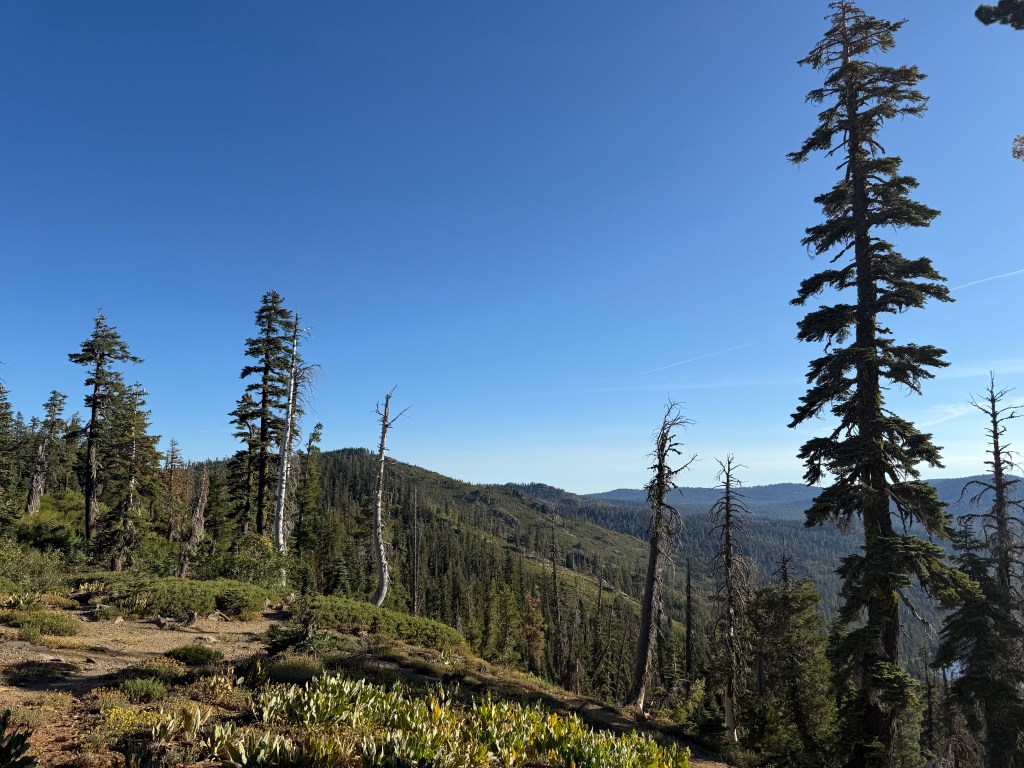
The DH race starts from Packer Saddle at the top and is ~14 miles of (mostly) descending back to Downieville. The course varies only at the start from the XC course, then converges about halfway down. Riders are spaced one minute apart, and I knew that I needed to make up some positions if I wanted a top ten finish for the weekend. At the start, I initially sprinted hard into the trail as if it was an enduro stage, then had to mentally check myself as I realized that would be unsustainable for a hour of descending. Instead, I focused on nailing the corners, pumping whenever possible, and staying off the brakes as much as I could.
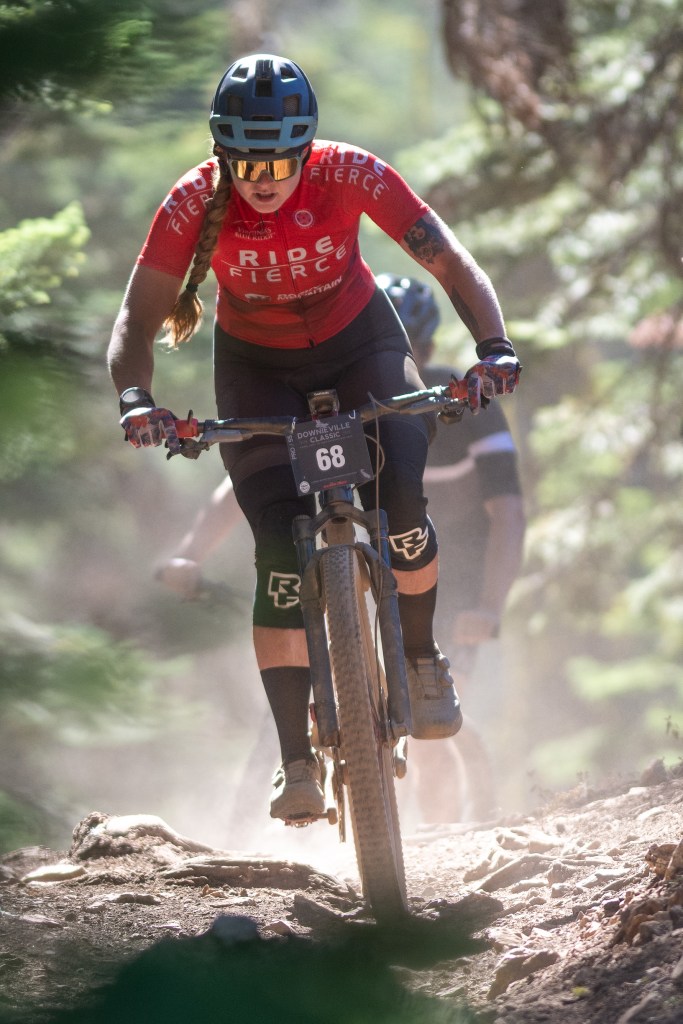
I was pleasantly surprised that I remembered the course fairly well from Friday’s pre-ride, and nailed each of the more tricky tech sections of the DH. I did, however, bobble again on the same spot as in Saturday’s XC (apparently that line is not the line, and yes, I took the same line both days lol), so dabbed once and lost some time. I also put a foot down on the middle climb when my derailleur mis-shifted and stopped me in my tracks, which was frustrating. Still, I pushed as hard as I could without blatantly risking flatting or yeeting myself into oblivion, and when I made the turn onto pavement at the bottom, once again put my head down, got aero, and pedaled hard to the finish.
I was disappointed to be just shy of breaking the one-hour mark, with a finish of 1:01:28. That was, however, enough to squeeze into 9th for DH and 10th for all-mountain.
Takeaways:
- You lose far more time on the climbs than you can make up on the descents. Go with a fast/light/efficient set up, even if it means being a bit more cautious descending.
- The DH still has enough climbing that the climbing matters. Be ready to sprint each of the climbs (even if it means going a bit slower on the descents leading into the climbs).
- Wear a hydration pack–there’s hardly any time to grab bottles.
- Knowing the lines matters, but its probably best not to pre-ride on Friday if possible. Pre-ride Thursday, then rest on Friday so you can really give it on the climbs both days.
The Party
Like Iceman, part of the appeal of Downieville is the vibes, and in that department, Downieville does not disappoint. Some of the non-racing highlights of the weekend included:
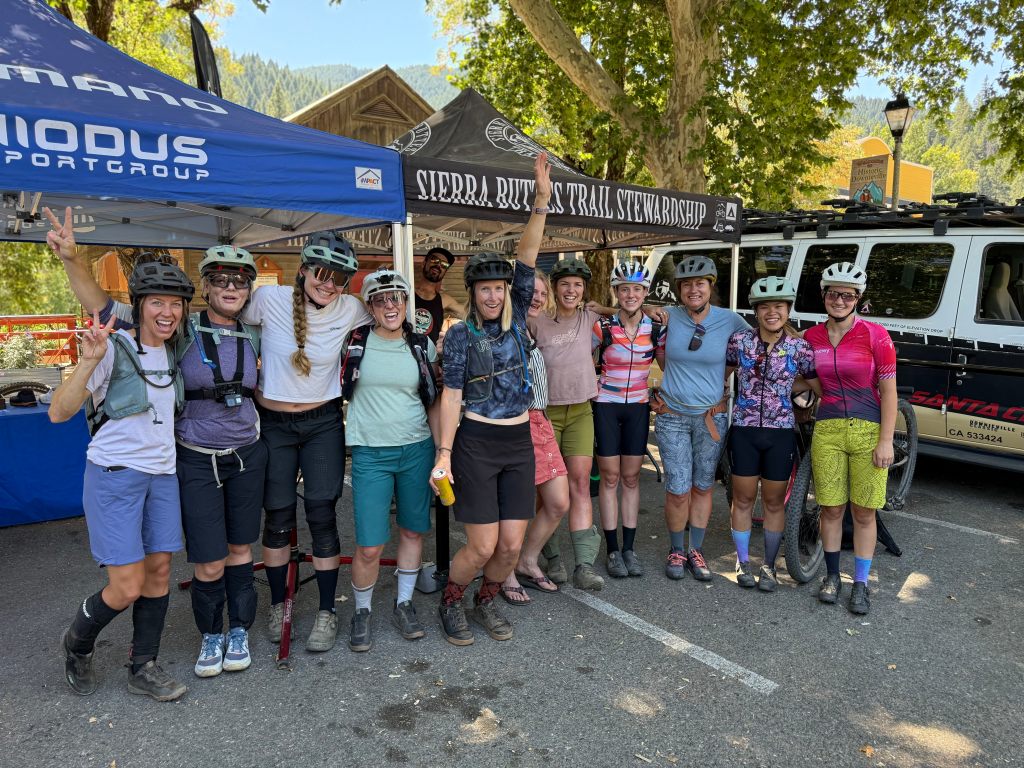
- We did an all-women’s DH pre-ride on Friday afternoon which was super rad. I love getting to ride hard, session features, and generally have fun on two wheels with other women. Having an entire shuttle full of ladies excited to race was awesome!
- The “Ron’s House of Big Air” river jump on Saturday afternoon was genuinely impressive to watch.
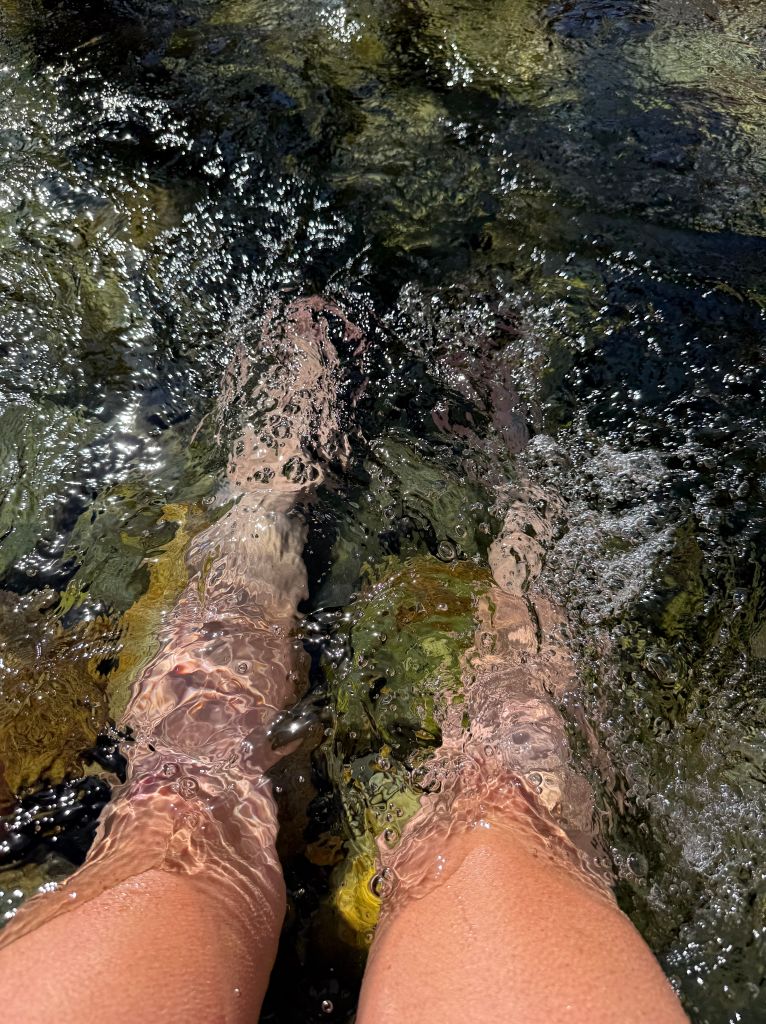
- The confluence of the Downieville and Yuba rivers is right in town and the water is so, so clear and cold. It felt great to get in the river each day after riding and hang out with friends new and old.
- Speaking of friends, I loved getting to reconnect with people I’d met at other races while also meeting new people. As always, the people is what makes racing mountain bikes so great. Perhaps the wildest coincidence was happening to pull in to camp next to a guy from Bellingham that I had met in Virginia over a year ago.
- There was also a dance party, a log pull, a late-night concert / music thing, and all kinds of other non-bike-race things happening all weekend that I didn’t go to due to attempting some semblance of being rested/recovered for race day.

In short, I would definitely go back and race Downieville again. I’d change a few things, but all-in-all, I’d keep most of the set-up the same. While I’m happy to have accomplished my goal of top ten, I know there is room for growth there.
 Ride Fierce Racing