Correct me if you speak French, but I think that means “I love it here.” It’s been years since I spent time in Europe, and it really is addicting. I’m sitting in the Zurich airport now, waiting to board my flight back to the U.S. and already scheming how I can come back and spend more time (a month? a summer? longer?) riding bikes around Switzerland and the rest of Europe.
But I’m getting ahead of myself.
For 2025, the UCI chose to host the World Championships for all 8 mountain bike disciplines in the same country over a two-week period. This meant that cross-country marathon and enduro were both happening in Switzerland a week apart–which was the impetus for me setting “qualify for Worlds in both disciplines” as my stretch goal for this season.
Coming off of shoulder surgery over the winter (and then getting hit by a car in January), along with legitimately still being relatively new to enduro racing, I was not at all sure that I would be selected for enduro. Too, a few less-than-stellar XCM performances this summer and the daunting elevation profile of the XCM course (> 16,000ft in 77 miles?!) made me question my readiness for XCM. Still, when the selection announcement was made, I was on the team–for both disciplines. (Though it remains to be confirmed, a fellow racer indicated that I might be the only athlete to compete in both a cross-country and a gravity discipline at World Championships this year?!).
Enduro World Championships
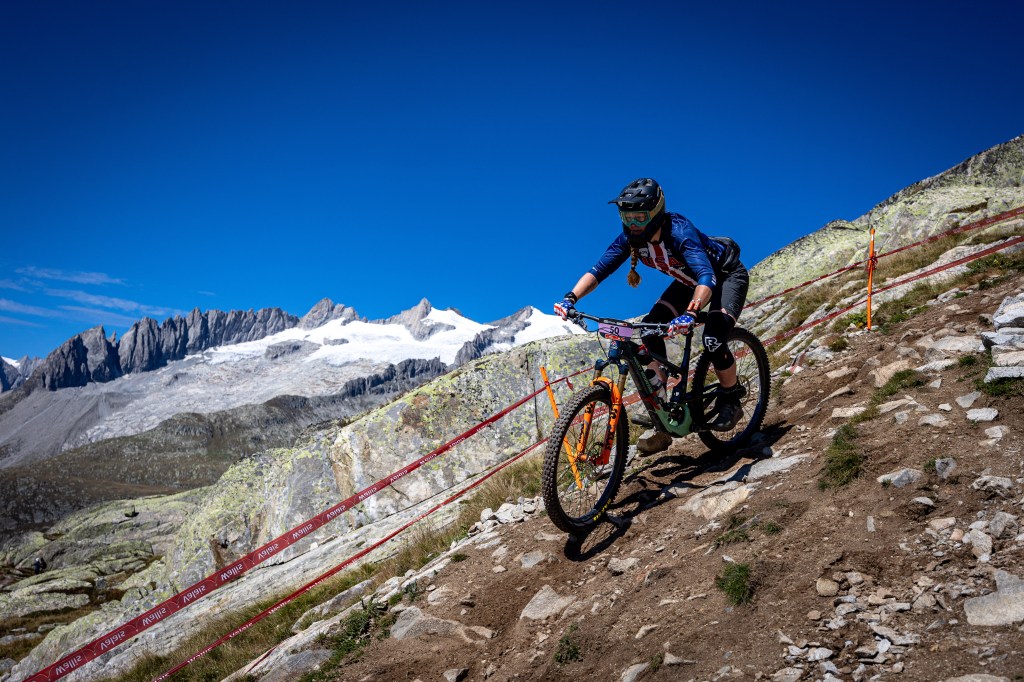
It’s a little insane that my first international enduro race also happened to be an elite World Championships, but c’est la vie! Initially, I was incredibly nervous about racing enduro in Europe, but after a weekend at Snowshoe chasing some faster friends, and then a final lesson with Harlan (Take Aim Cycling) drilling position, I felt ready.
When I landed in Switzerland, I picked up the rental van I had selected (because of having to fly with two bikes, which unfortunately made getting around by train/bus less feasible), and managed to wrangle the seats into a jenga-style configuration that made space for two bikes, my bags, and for me to sleep. The venue gratefully provided athlete parking, which made it simple to van camp for the first two nights. I built my bike up in the parking lot once I arrived, and did a quick spin around to shake out the legs before stopping by athlete registration. There, I ran into a few other U.S. athletes that I knew, as well as one of the Canadian team coaches, Adam, who I knew from BC Bike Race. There’s something about knowing other people that removes some of the stress of racing in a new venue–even if you aren’t actually riding together.
The next morning (Saturday), it was time to pre-ride the course. It was a foggy, wet morning, and the current forecast indicated that the area was going to get hit by storms and large amounts of rain on race day (Monday), as well as occasional showers during the pre-ride. When I got to the top of the gondola and started to pedal towards stage one, I happened to pedal up to a few guys speaking what was noticeably American English (it is pretty evident lol), learned they were from the U.S., and ended up joining them for the first part of the day.

I was somewhat surprised to realize that the jank and tech of the trails in Aletsch Arena, where the race was being held, was well within my skill level (even if, at speed, still a little out of my comfort zone). Unlike some U.S. enduro races, there weren’t any huge jumps or gaps, and the “craziest” feature was probably a wide, steep, muddy bit on stage 4 that reminded me of some Snowshoe enduro tracks. Let ‘er slide–and aim for the catch berm!
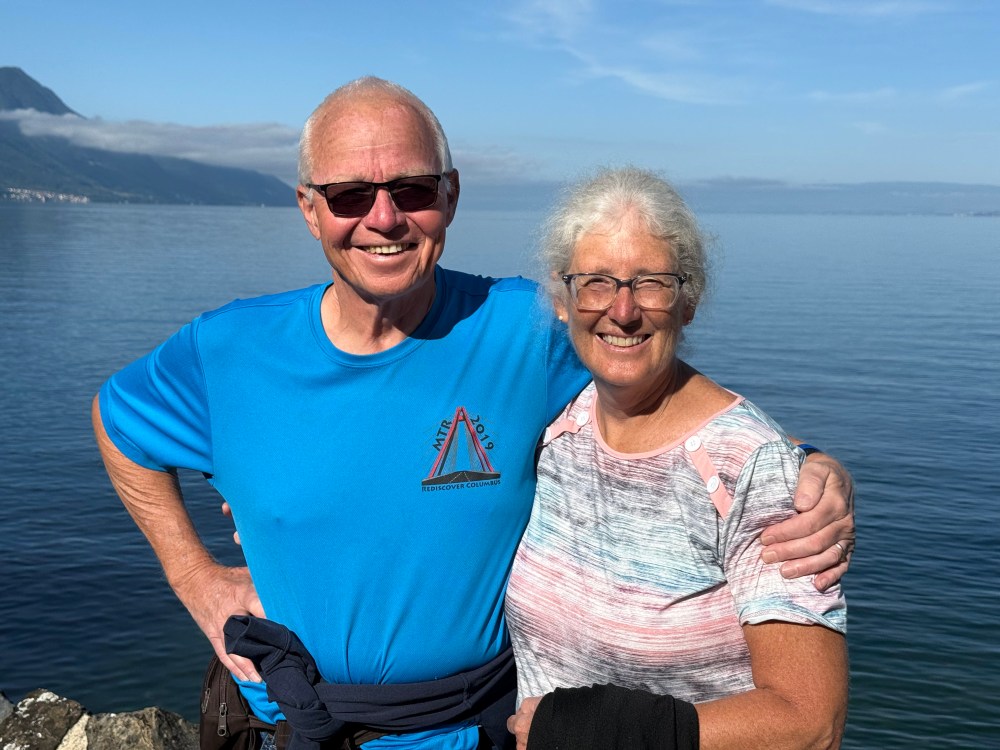
Eventually, we learned that we would practice and race Stage 2, “Glaciara” on Sunday, when the weather would allow for helicopter access/rescue if needed, and then race the remaining stages on Monday as originally planned. My parents were flying out to join me, and due to arrive mid-day Sunday, so I communicated the change in plans to them, as well as my start times and that they should take advantage of the nice weather to see the Alestch Glacier themselves via gondola!
Stage 2 was the chunkiest stage by far, and after a “no stops allowed” practice that kind of felt like a blind race run (because I really would have liked to stop and look at a few lines), I didn’t feel at all ready to race it. Still, I knew I could get down–even if not quickly, and focused on staying in a strong and balanced position and pushing on the few short climbs. When I finished and checked the results I was grateful (and surprised) to see that I wasn’t last. One stage down, five to go!
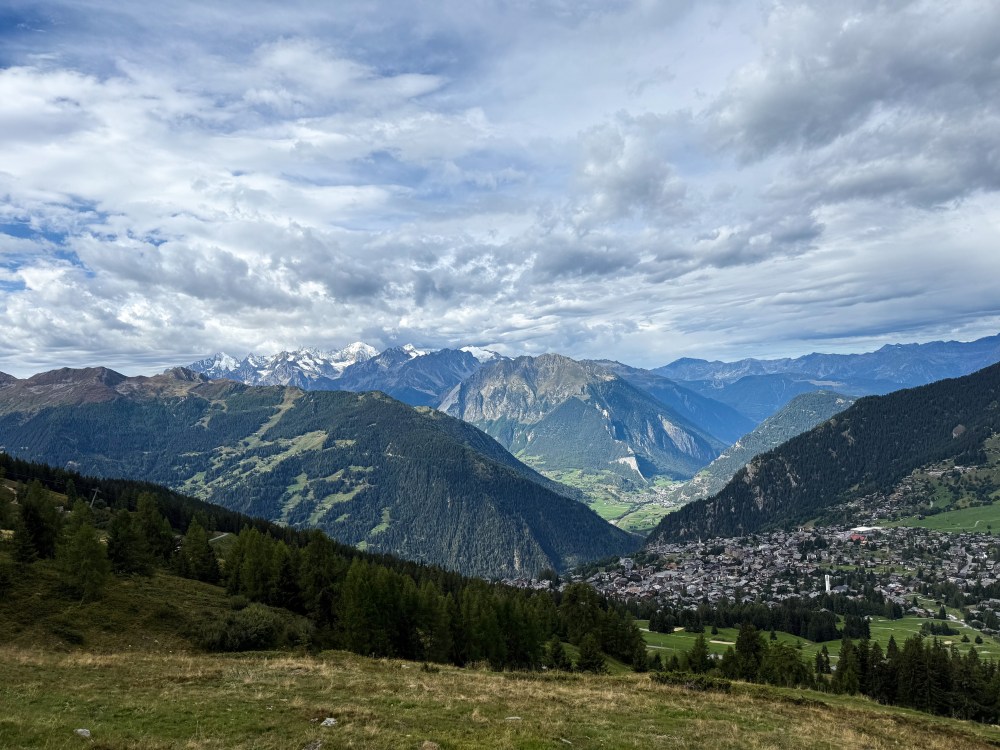
I met my parents for dinner that evening, and moved from my car-camping situation to the AirBnb that they had booked in a nearby town. On race morning, I prepared for the worst, packing two jackets in my pack in preparation for a long, wet, cold day on the mountain. In the end, it did rain, but not nearly as hard or relentlessly as forecasted. Stages 1 and 3 went really well and cleanly, and then on Stage 4, which I actually enjoyed the most (lots of steeps!) during pre-riding, I completely fell apart. The trail is called “Old DH” or something along those lines, and it’s pretty rocky towards the top, and was much slicker than when we pre-rode, and though I kept it up at the top, I had several sketchy moments, including somehow coming unclipped from my pedal as I hopped over a small rock feature. From that point on, I struggled to feel balanced–and honestly, was probably riding a little scared/too far back. I rode some of the hardest sections really well, but on one straightaway, must have slipped on a sniper root, because I suddenly found myself flying off the side of the mountain–I landed literally about 15 feet below the trail, and had to climb back up, then fix my brake lever, which had managed to slide inward nearly to my stem. After collecting myself and fixing my bars, I tried to get “back in it,” but then took an inside line to nowhere (one I had ironically noted when pre-riding–and still ended up taking) and buried my front end in a gully, slapping my head sideways into a tree hard enough to dent my helmet. Again, I resumed riding, but really just felt like I was hanging on and trying to survive for the rest of the stage. I wasn’t hurt, and didn’t feel like I had a concussion, but was frustrated at the time I’d lost when I’d been riding so well up until that point. After the long climb (and hike-a-bike) up to Stage 5, I was ready again to give it my best, and was pushing it into the first few grassy corners–which were wet and slicker than expected–when I slid out, nearly saved it, then clipped a course marking and crashed again. I got up quickly, and got started, only to realize that my bars were very crooked, requiring me to stop and straighten them. Despite my frustration at losing valuable seconds, this time I was able to get centered, find some flow, and ride the rest of the of the stage well. The final stage (stage 6) was “Back to the Roots,” a flatter, but root-covered stage, and my best stage finish of the day (35th).
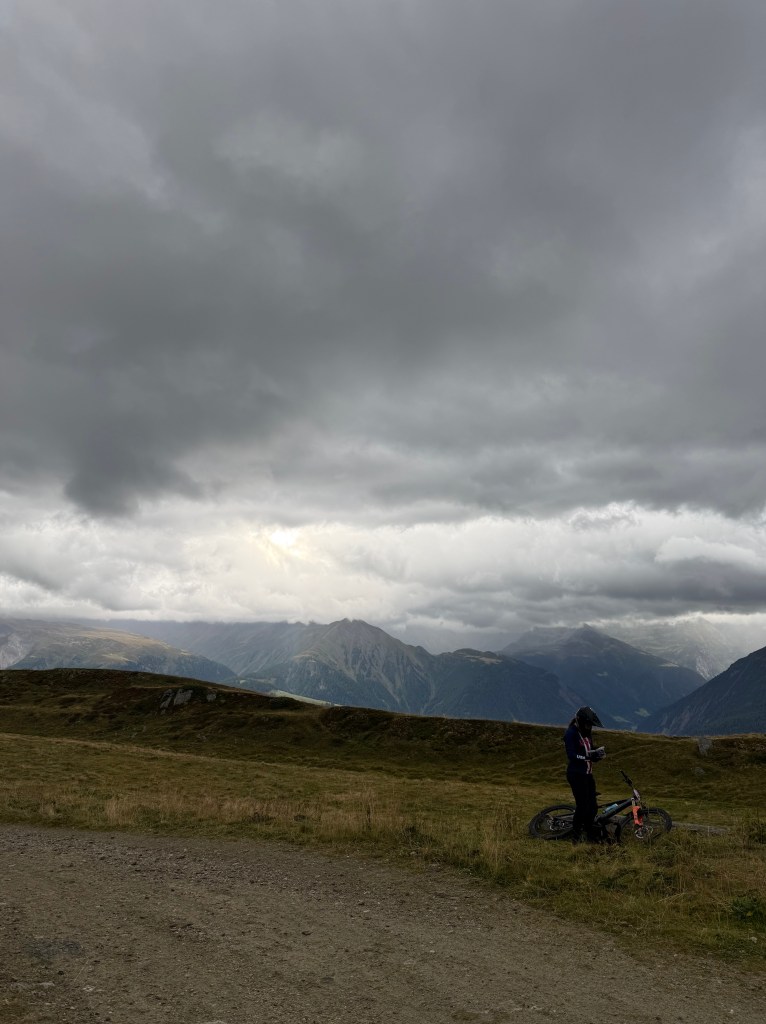
In the end, I finished in 39th place, out of 46 riders. The place itself isn’t anything to “write home about,” but I’m still proud of showing up, riding well (for the most part), and all of the physical and mental preparation that went into being as ready as I could to race at this level. The views were all-time, the trails were fantastic, and I’d love to come back to Europe to try my hand at more enduro racing sometime!
Cross-Country Marathon (XCM) World Championships
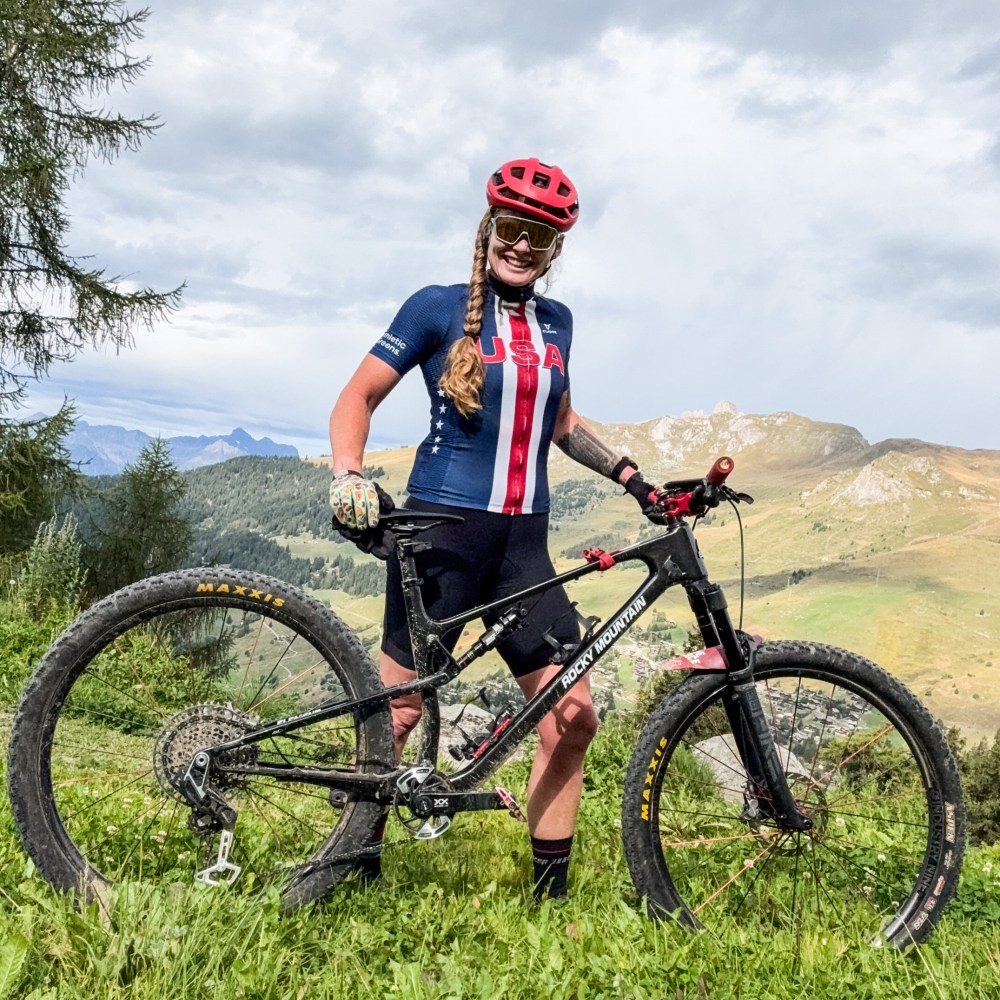
Technically, I was more prepared for XCM than I was for enduro, as this was my third time racing XCM World Championships (which in and of itself is INSANE to think about), but I really struggled to mentally frame this particular race in a way that excited me. From the research I’d done, the course itself, at 77 miles with ~16,000 feet of elevation and primarily double-track or gravel roads, didn’t seem to suit any of my strengths as a rider. But still, I wanted to show up in a way that I could be proud of–which mean engaging fully, doing my best, staying curious, and having fun along the way.
The point-to-point race format, while really cool, is challenging from a logistics perspective. Too, I had just put in several big days of riding enduro, so was attempting to balance pre-riding the XCM course with recovering from enduro–and working full-time. While typically my job is pretty flexible, this particular week was incredibly stressful, and I ended up working four 10-12 hour days in an attempt to finish a project that just was not going my way (despite technically being on PTO one of those days).
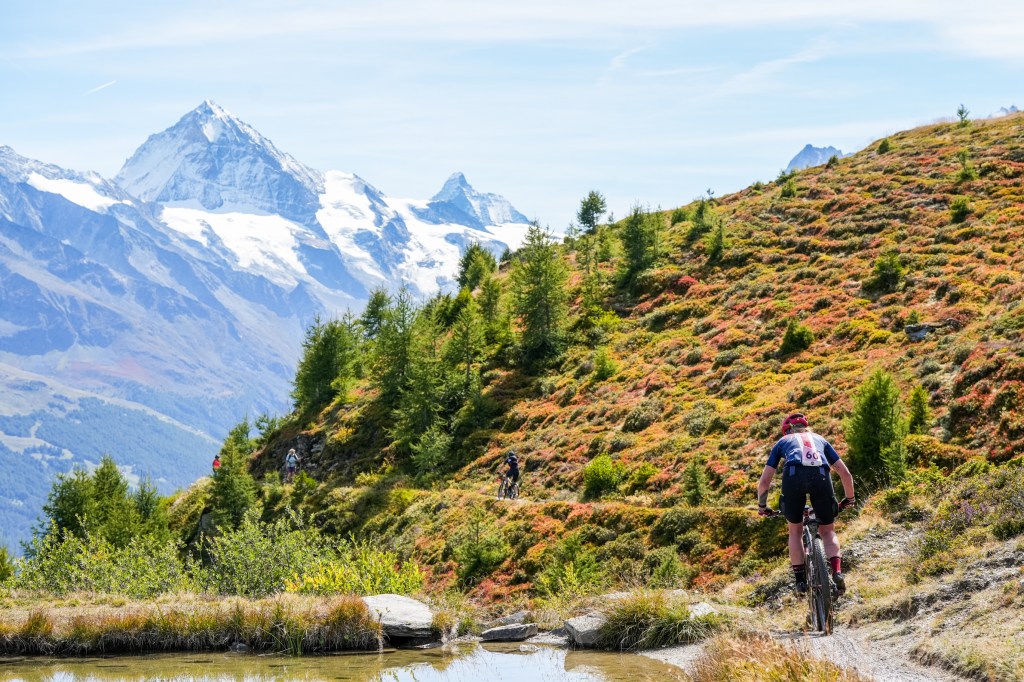
Thursday morning, I drove up to the start to ride the first climb of the course and was surprised to realize that it didn’t feel as steep (or, generally terrible) as I’d expected–and then had fun ripping the Verbier Bike Park blue flow trail back to town, where I met up with a friend who I’d raced my first international XCM with, in Columbia, back in 2023. It was incredibly fun to relax for a few minutes, enjoy a coffee and croissant, and share how our athletic journeys had mutually evolved towards chasing joy and adventure above pure performance outcomes.
It was a chilly morning in Verbier for the start of our race, and as I rode the gondola up to the start in the dark, I reminded myself that even being there was a privilege, and that all I had to do was ride my bike–steady on the climbs, push on the flats, and smooth on the descents.
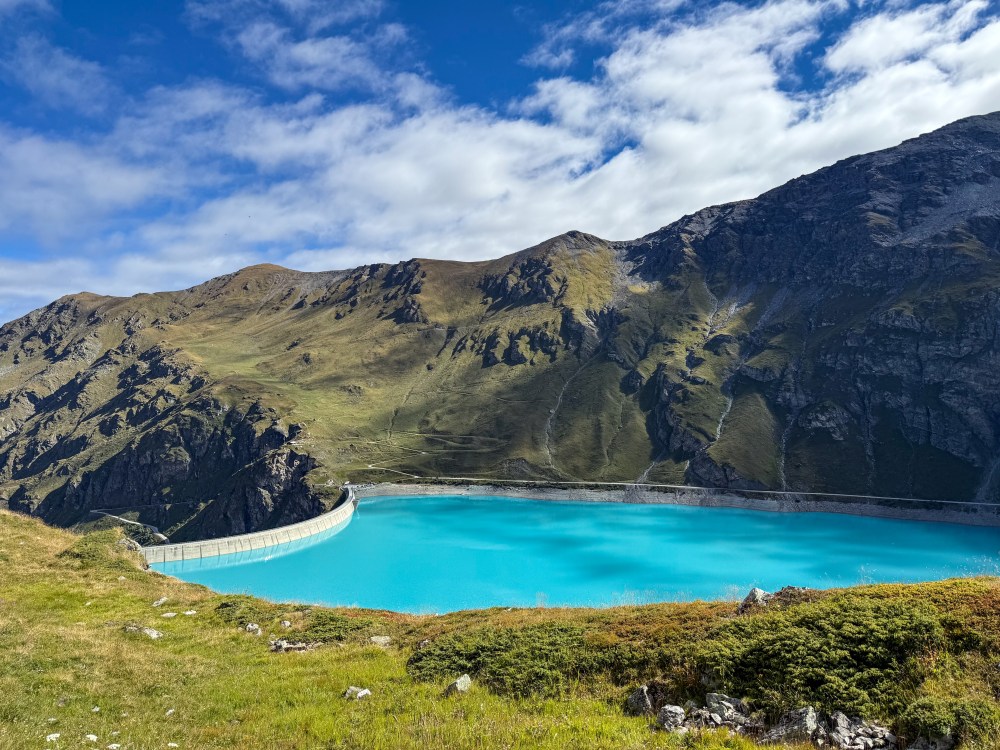
Because I’ve not chased UCI points this year, I started at the back with last call up, and only moved up a few places into that first climb. My legs and feet were cold and I struggled a bit to push with the cold air burning my lungs, but knew if I held a steady pace, that there would be time to push later in the day. On the first descent, which was a flow trail with something like 50 berms in ~2 miles, I got stuck in the first of many singletrack traffic jams, leading me to the realization that I should have learned how to say “please let me past” in French prior to starting the race. =D
My parents, who have never helped in feed zones before, did a phenomenal job of getting to every feed zone, handing up bottles on the move, and navigating the chaos that is a UCI tech zone. This was an enormous help, as I’d otherwise have needed to rely fully on neutral support–though, in this case, as the World Championship race was combined with the Grand Raid BCVS event, there were 10x as many neutral support options as in any of the UCI XCM races I’ve done previously.
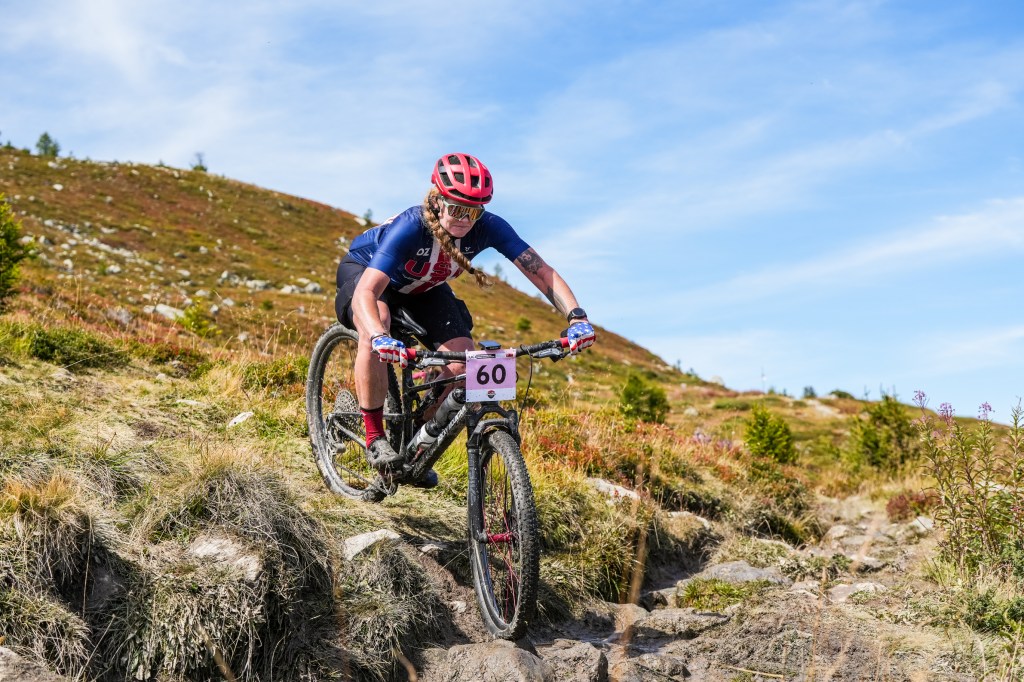
The course turned out to contain more singletrack than I expected, some of which was fun, flowy trail through woods that reminded me of British Columbia, some that was rocky, techy trail with alpine views, and even the occasional straight-line trail down a ski slope. Between the unexpected singletrack and the stunning vistas, I was really enjoying the course (and even had the thought mid-race that I’d love to come back and bike-pack it over two days so I could take all the photos that I wasn’t able to take mid-race). Too, I was slowly making my way up through the field after my slow, cold start.
Then, in one of the techy singletrack bits where I was struggling to get around people who were walking, someone abruptly stopped in front of me, and I sat down on my saddle and heard the rails catastrophically break underneath me. (I recognized the sound because I had the same failure when racing enduro last month). With a few muttered (yelled?) expletives, I picked up my seat, examined the remnants of carbon rails sticking out from my seatpost clamp, and started walking until I could safely remount. Fortunately, there was only a bit of techy, undulating singletrack (which required me to step off at points rather than letting the carbon shards potentially impact my legs) remaining before we started descending on two-track, and then road. Some quick race math told me that I was about 2 hours ahead of the cut-off pace, and that I had approximately 30 miles to go to the finish (19 miles of which were climbing). I also knew that the last 8 miles of the course were downhill, and that if I could past the final cut-off, I would be able to finish.
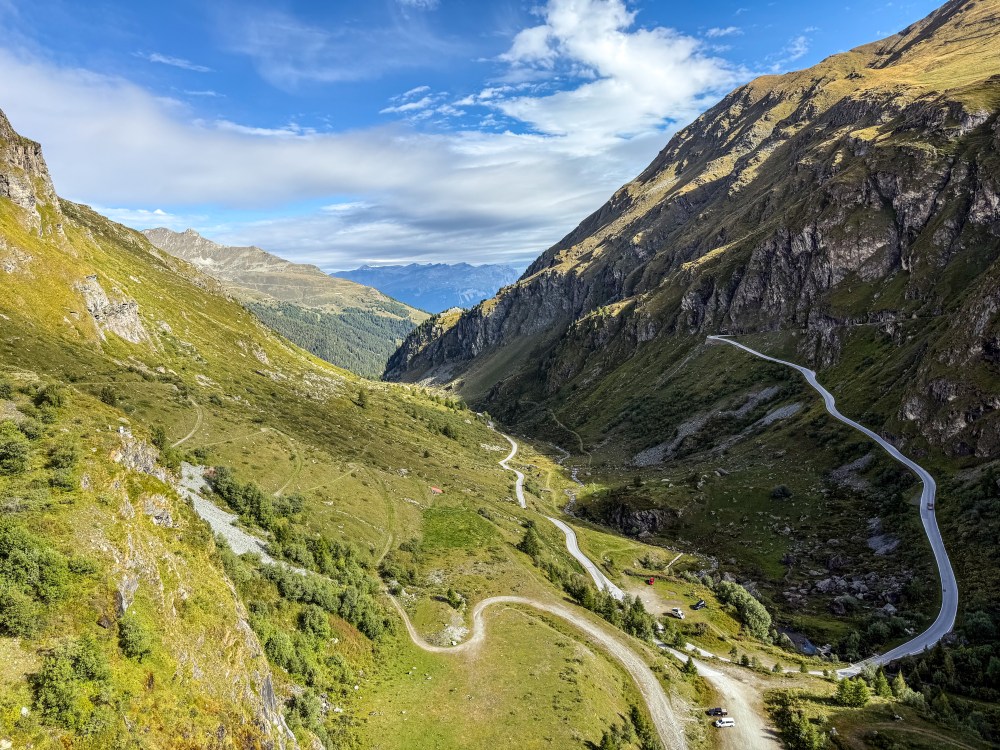
At the next tech zone, I stopped, used a tool to loosen my saddle clamp and remove the sharp carbon bits of rail that was left, and attempted to wrap my seat bag around the top of my post so I’d be able to at least rest on it. I learned a few things: (a) the saddle adds about 2.5 inches to the height of a seat post, so when I was perched on my seat bag/seat post, my pedaling position was way too low, (b), eventually the tube inside said seat bag will compress so much that it is impossible to attach the velcro strap (meaning the bag no longer stays on top of the seat post), and (c) when the seat bag slips forward when trying to use the dropper post, it will activate the button on the top of the dropper, causing the seat post to neither stay up or down as expected. It’s been over a year since I rode singlespeed, but I’m grateful I at least had that experience in my back pocket when facing these long, grueling climbs.
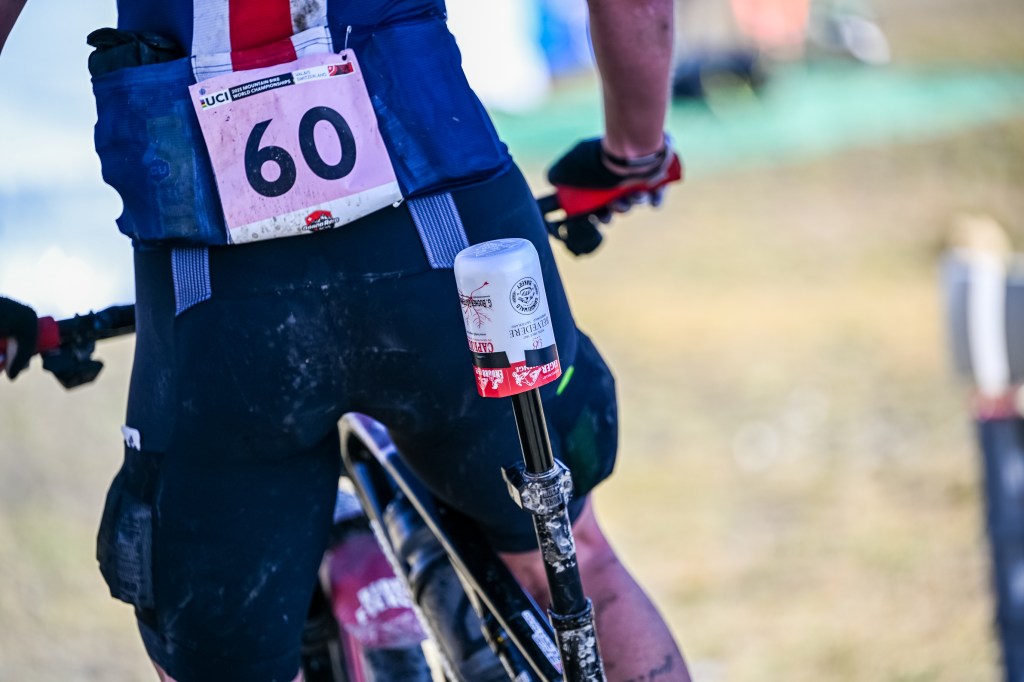
The first 3-ish mile climb, I alternated mostly between standing and perching on the seatpost and even managed to pass one of the other elite women, but eventually the fatigue set in. Even when perched against my seatpost, I struggled getting to my bottles or gels, and so in addition to being forced to stand to pedal effectively, I wasn’t fueling well, and the effects were obvious. Mid-way through the next long climb (the women’s winner, Kate Courtney said it was an hour climb–I’m sure it took me MUCH longer than that), I was struggling to maintain more than 5-10 standing pedal strokes at a time, then a similar number of awkward, uncomfortable pedal strokes will perched on my seatpost, then back to standing, when the Swiss woman who I’d passed previously caught me and slowed up to encourage me to keep going. I had no intention of giving up, but I was legitimately worried about not making the final time cut-off, as my 2-hour lead on the cut-off pace was bleeding away, and I was to the point where I was starting to mix pushing my bike into the mix of standing and perching–just to keep moving forward. Her encouragement was such an unexpected gesture of generosity and true sportsmanship–and so, so needed.
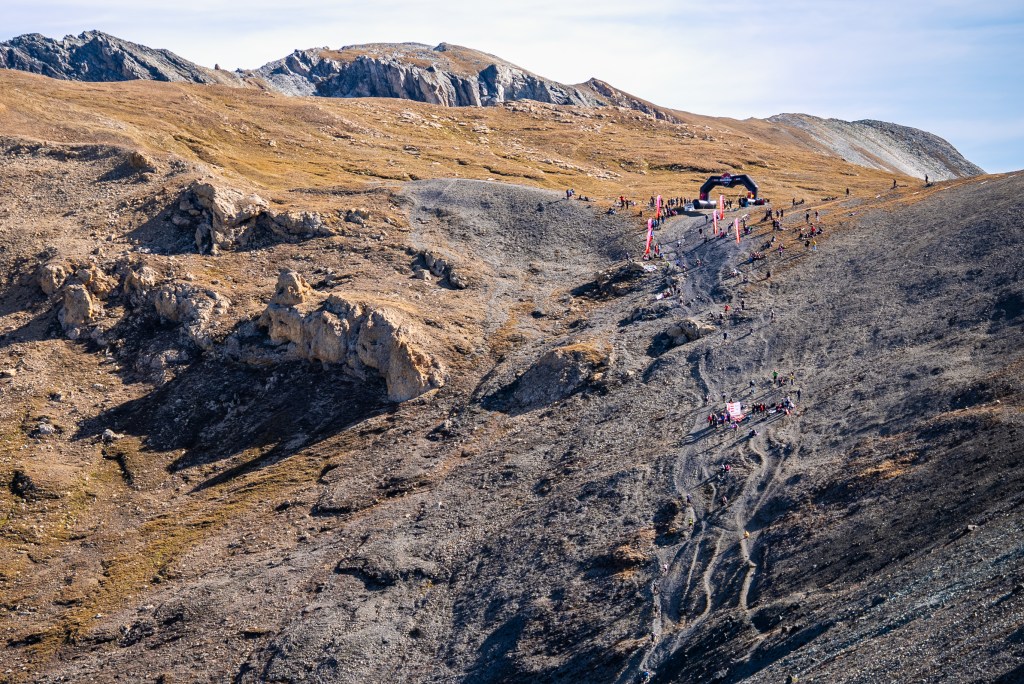
When I finally reached the aid station (and final time cut-off point, with less than 20 minutes to spare) just before the 1-mile, 1,300 foot hike-a-bike, one of the people staffing the neutral support noticed that I was riding sans-saddle, and took it upon himself to cut open a discarded water bottle and put it over my seat post upside down, to at least provide marginal protection from the seatpost itself–all while I was gulping down cupfuls of Coke (I think this might be the first time I’ve ever drank Coke in a race–which in and of itself shows just how cracked I was).
The hike-a-bike itself was terrible, and I’m so glad that I did Rockstar earlier this year to give me practice in finding a rhythm even while dying a thousand deaths pushing my bike uphill. Thirty steps, stop for ten breaths, thirty more steps, repeat. It was brutal, but my goal was to just keep moving forward–the top meant that there was only one mile-long climb left, and then a descent to the finish. When I made it to the top, I very nearly collapsed over my bike before getting on, and ripping the short singletrack descent (which was EPIC alpine singletrack and very nearly worth that heinous hike a bike!) before the last climb. Here, I again caught up with my Swiss friend and told her that I hadn’t (and wouldn’t) quit–and then lost her as I struggled up the final climb.
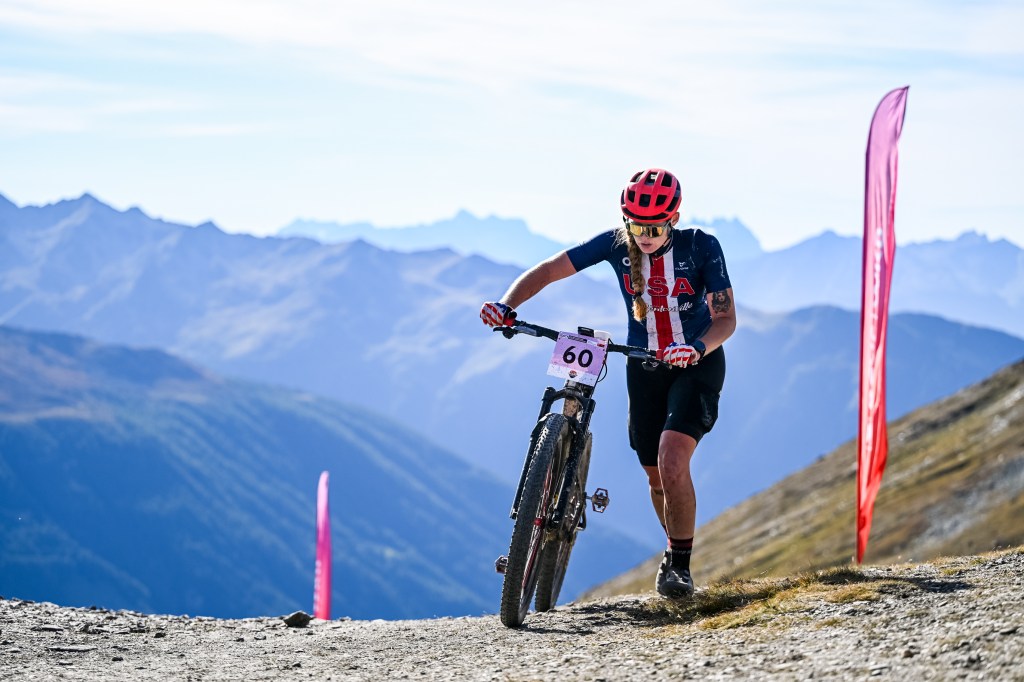
When the course finally tipped downhill for the last time, I put my seatpost down (as far as the bottle sitting over the post would allow) and reminded myself to keep it smooth as there was no point in crashing now. I kept it in check on the gravel portion of the descent, then opened it up when I hit singletrack. The final singletrack is a hiking trail descent that gets pretty chunky in spots, but I had pre-ridden it, had a decent idea what was coming, and was confident in my ability to navigate it, even with my seatpost higher than normal–and my upper body already exceptionally fatigued from standing/balancing on my bars rather than my saddle for the last 4.5 hours. I think I passed 5-8 people on the descent, where, for the first time all day, the rocks clattering off my tires as I skidded down switchbacks behind them must have been warning enough to move out of my way. I found enough gas in the tank to stand and pedal for the few little pedaly sections, and then let it all hang out when the trail turned to doubletrack in the last mile, passing a final few riders like they were standing still and just praying I wouldn’t flat.

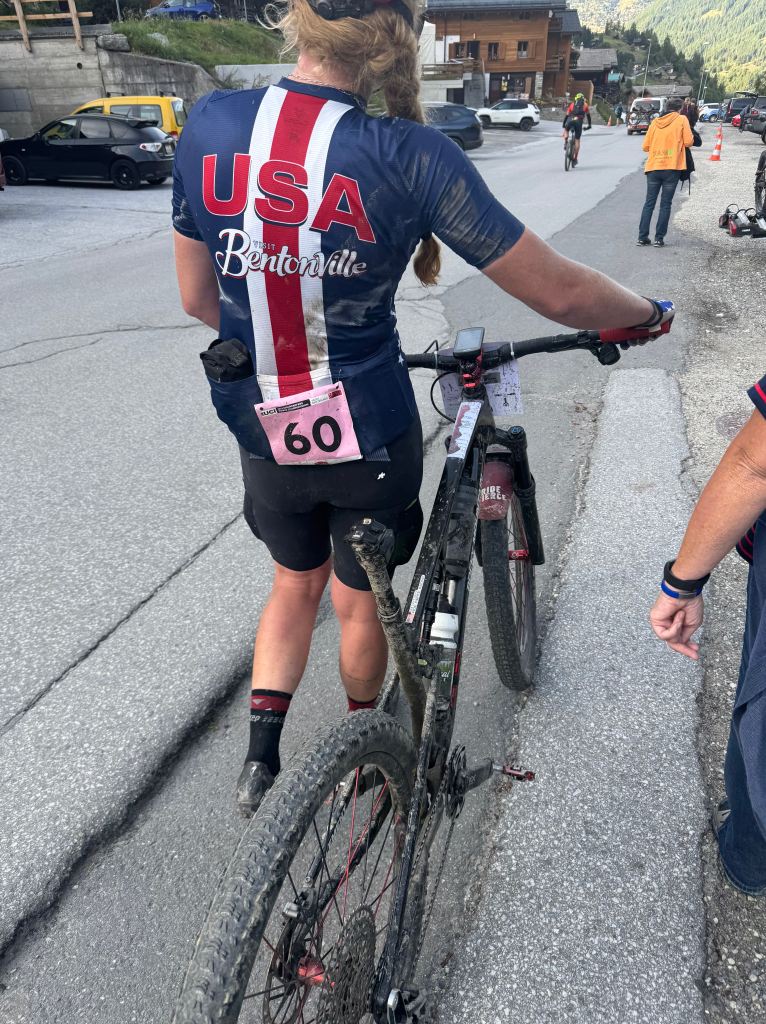
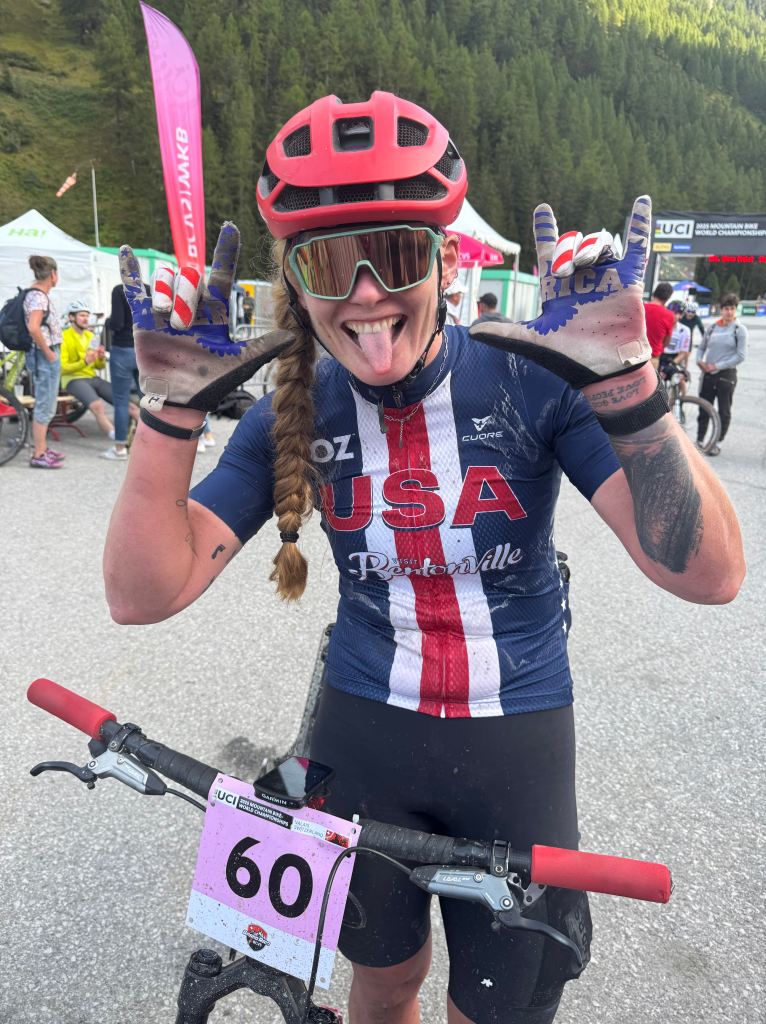
After just over 11 hours on course, I crossed the finish line as the last UCI Elite finisher, and my worst finish place at World Championship yet, but I was too cracked to even care. Riding 30 miles and something like 6,000 feet of climbing with no saddle is by far the hardest thing I’ve ever done, and I was happy just to finish. Also, I’m so, so glad Enduro was before XCM–I don’t know if I could have recovered from that to race Enduro afterwards.
Final Thoughts, B-Zone style
- For whatever reason, I vibe way more with the French part of Switzerland than the German part. Too bad I’ve forgotten most of what I once knew of either language (though I definitely remembered more French than German!)–maybe it’s time to start re-learning French again after forgetting it for a decade?
- Along the XCM course, there were points where I could have sworn I was in BC, with the raw enduro-style trails popping randomly onto the gravel roads we were climbing to prove it. I definitely want to come ride more of those trails!
- Enduro isn’t dead.
- Women’s mountain biking might be the best example of great sportsmanship out there. We’re all in this together–and by encouraging each other, we all become better practitioners of our sport.
- I might be “done” chasing UCI points, but that doesn’t mean I can’t come back to Europe to race. If the Swiss Enduro Series and the Grand Raid BCVS races that happened alongside the World Champs races this week are any indication, grassroots racing is rad.
- Speaking of rad, the bacon and tequila(?) handup heading into the hike a bike was gold. You know I took it–to the rowdy cheers of drunk fans everywhere. LOL.
- Pump tracks and bikes and trails everywhere. And even though I drove a car this week (because two bikes), public transport options everywhere (I even “shuttled” to the top of the final descent by bus to pre-ride). I’m in love with Europe all over again.
- My parents are rock stars and made the logistics of this trip much, much simpler by letting me join them in their AirBnbs as they did a mix of tourism and bike-race-support (which isn’t easy for people who’ve never done it before, don’t speak or read or understand French at all, and aren’t used to navigating in a foreign country). Seriously, amazing.
 Ride Fierce Racing