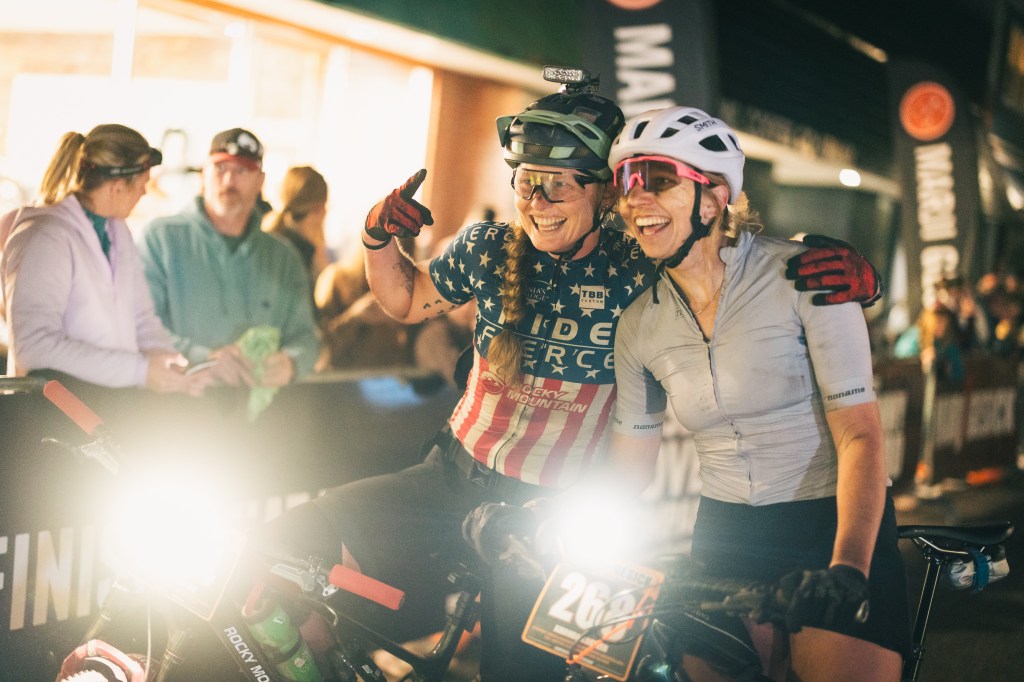
Some of my best performances have come from that strange space between confidence and curiosity: in this case, between knowing that I thrive in the techy singletrack and the uncertainty of not knowing whether I can actually ride a singlespeed for 100 miles.
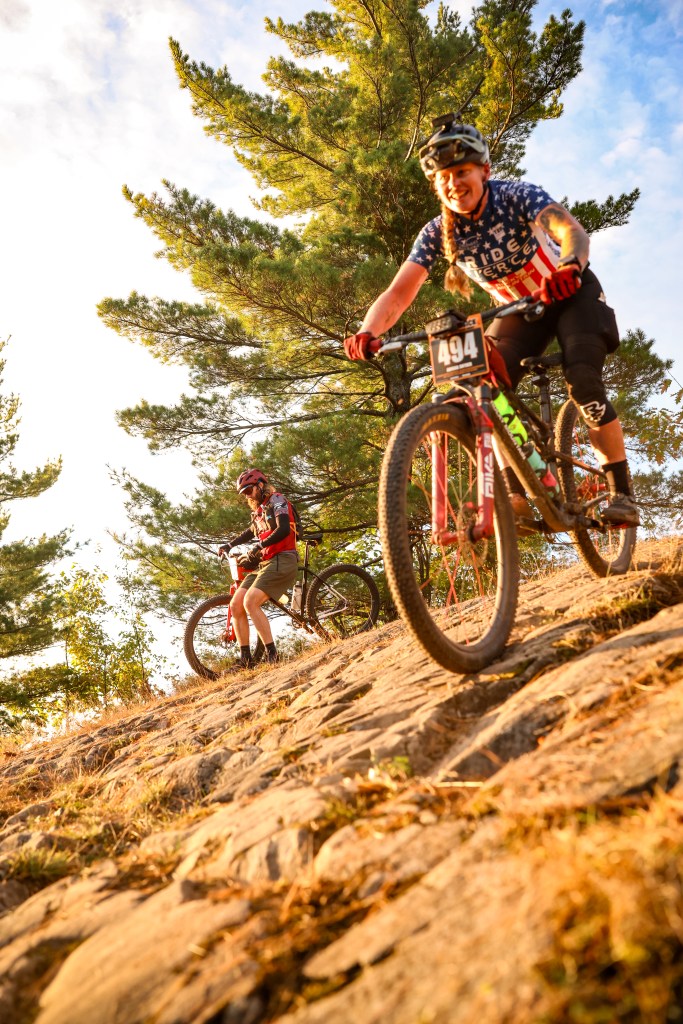
The Marji Gesick is a special race: it’s 100 (more accurately, 109) miles of singletrack in and around Marquette, Michigan. The race is legitimately hard, really hard, but its also a celebration of community, of challenging yourself, and of really incredible singletrack riding.
Last year, I finished the race in 14 hours, 15 minutes–2 hours+ behind the three women who made history by being the first women to meet the 12-hour cut-off for a belt buckle in the history of the event. Honestly, I was content with that effort, and wasn’t even sure if I’d come back to Marji (there’s so many races and so little time–and money). But, when I ran into Todd at Iceman a few months later and he offered to get me into the already-sold-out event for 2026, I couldn’t say no.
Initially, my plan was to attempt a buckle finish this year. But to do that, I knew I would need course support, along with perfect conditions and a perfect race. As this year’s event got closer, I realized that two of those three things weren’t looking positive: I didn’t have support, and with my PCL still-healing, I wasn’t sure how strong I would be. So, I changed the script.
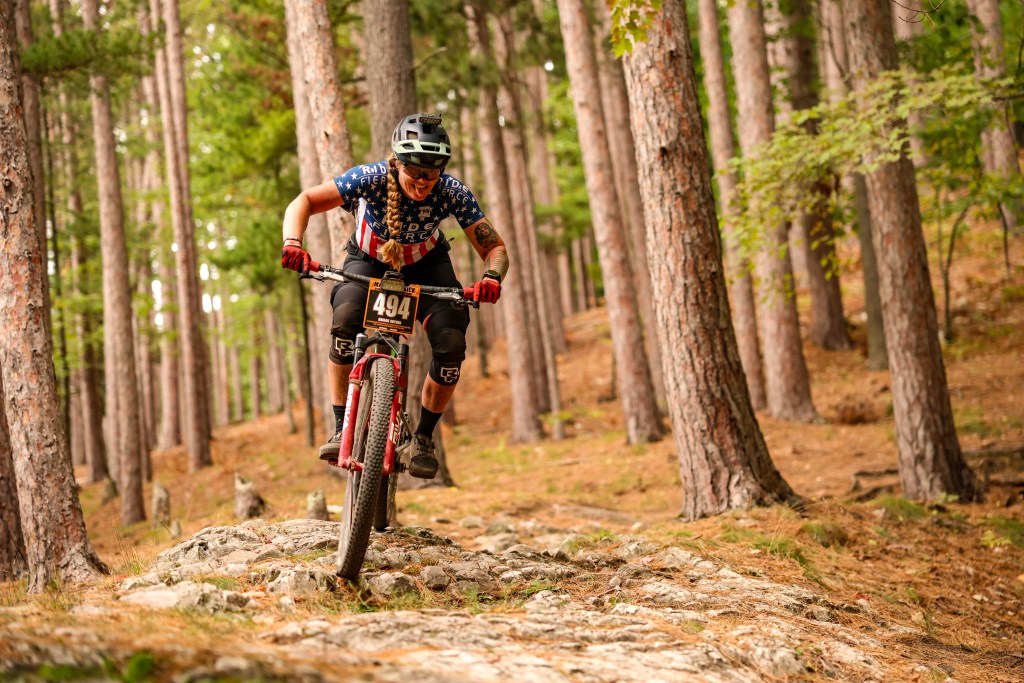
One pretty-cool result of winning the XCO Singlespeed National Championship was that The Black Bibs designed a RAD national champs jersey for me to wear. The limiting factor is that I can only wear it if I’m riding singlespeed…so, a week before Marji, I asked myself, “how hard would it be to race Marji on a singlespeed?” Then I asked my coach the same question.
The answer: really f@%$ing hard.
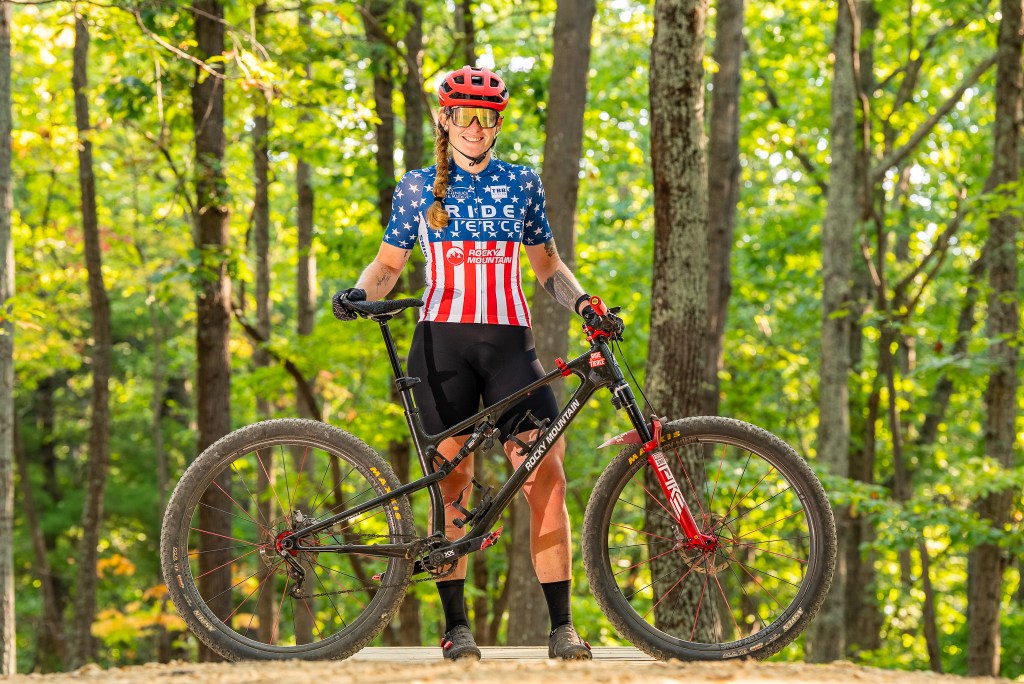
I honestly wasn’t sure if I could finish. My longest singlespeed ride to date was somewhere in the vicinity of 25 miles, on a hardtail, on a mostly-gravel climb, 3-ish years ago, fully healthy. But I liked the idea of challenging myself with something I wasn’t sure was possible. Rockstar was that kind of challenge, and it pushed me to find the limits of what I was capable of.
So, at packet pickup, I found Todd and asked him to change my entry to singlespeed. Game on.
Marji Gesick is relatively unique in that it has a Le Mans start, meaning you run–then find your bike and start riding. Guess who hasn’t run since injuring her knee in March? Yep. It’s me. I stumbled my way around the running loop, found my bike, and started riding.
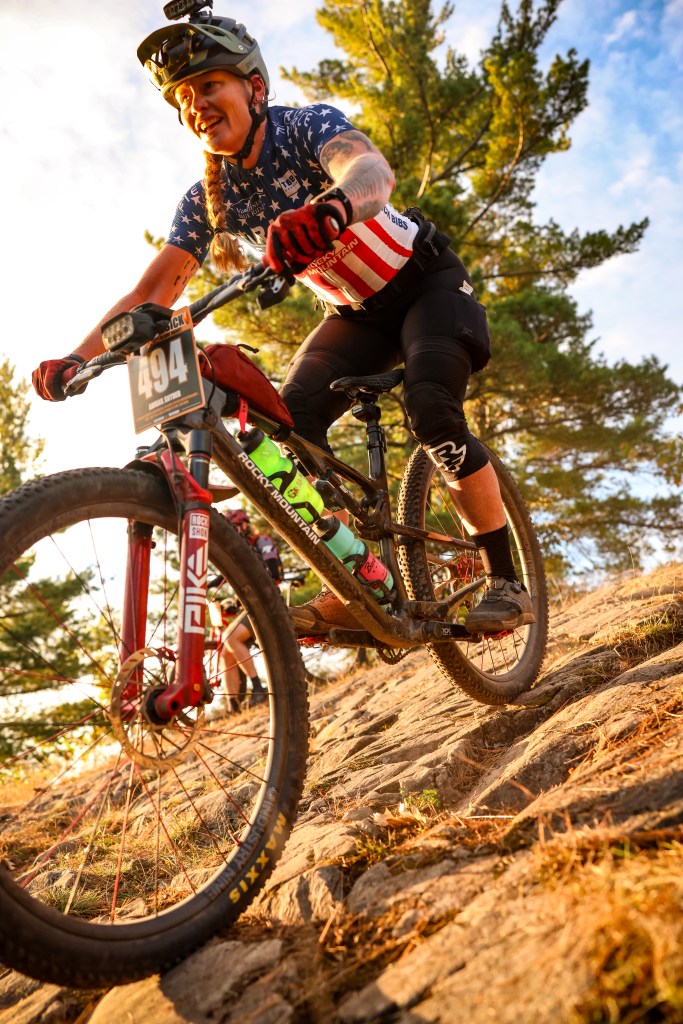
Especially for the first handful of miles, my gearing limited my efforts somewhat. I was still forced to stand and push for the climbs, but often on the flat-ish ski paths, was spun out just trying to maintain momentum. Even so, I was pretty confident that I didn’t want a harder gear than my “baby” 28×20.
My goal: stay smooth, keep forward momentum.
When I came through the Marquette Mtn. aid station at ~50 miles in, and learned that I was the first 100 mile female to come through, I still didn’t know if I would finish. Already, I was miles past my longest singlespeed ride to date…at what point would the wheels fall off? The only thing I could do was keep eating and drinking as much as possible…and stay curious. What was possible? Could I win this thing on a singlespeed?
Because I wasn’t able to organize on-course support, I relied fully on the neutral aid (which, honestly, is a really incredible part of this race for someone who often shows up to races unsupported). Anytime I saw people on-course supporting, I just asked “who has water?” and people jumped to help fill my bottles and get me rolling again. Amazing.
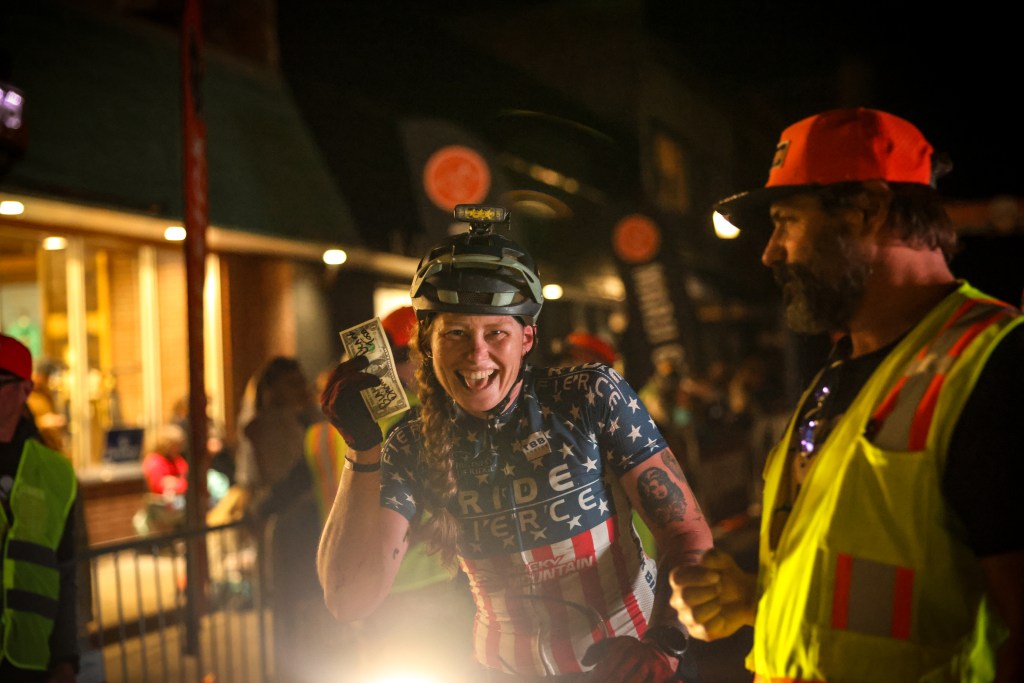
The last two-thirds of the race notoriously take longer than the first ~60 miles, and based on last year’s times, I expected the two laps of the RAMBA trails to take me close to 7 hours. When I looked at the clock as I was entering RAMBA the first time, I noted that I was on track to finish at close to the same time as 2025…if I could maintain pace.
Shortly after JP2 (approximately ~90 miles into the race), I saw the second place female behind me and decided to try and see if I had any other “gears” left. I buried myself for the next 10-ish miles, but had to stop at the last aid station for water and coke, fully cognizant that I was about to blow up in dramatic fashion. There wasn’t much left in the tank–and the final 10 miles of the race showed that. Amanda caught me shortly after the aid station, and we ended up riding to the finish together as she gracefully watched the wheels come off as my final push and lack of fueling since JP2 caught up with me: there was a lot of walking, some undue frustration, and general grumpiness at the steepness of the climbs.
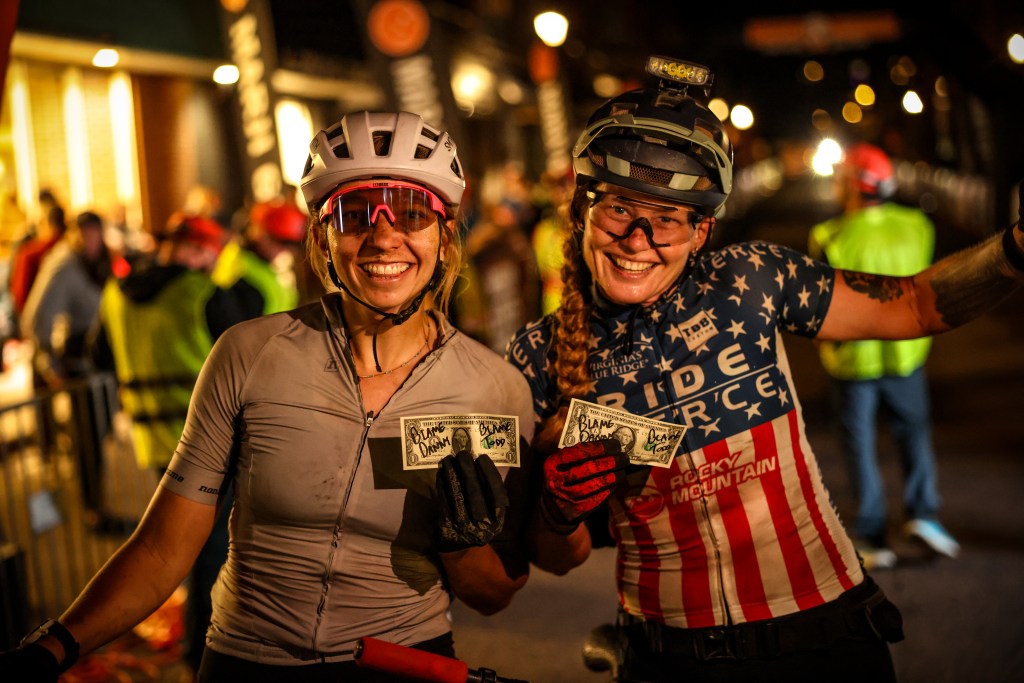
Our final “sprint” to the finish line in an attempt to finish side-by-side somehow ended with me finishing one millisecond ahead of her as the first female finisher of the MG100…but reality is that we finished together. ❤️
As it turns out, I more than maintained pace through RAMBA. I ended up finishing in 13 hours and 30 minutes, almost exactly 45 minutes faster than last year. Part of that was improved efficiency in refueling at aid stations/neutral support, and part was in not going off course for several miles–but I was over 15 minutes faster on the second lap of RAMBA alone. WHAT?!
I was met at the finish line by two of my “Michigan homies” who waited for me to finish: one of whom is to blame for all this singlespeed nonsense: I won the tensioner I’m using to be able to set up my Element as a singlespeed from him at last year’s Bootleg Enduro…and now look. 😂 Thanks Ed. The other is who talked me into Marji in the first place…both years (and who got his buckle this year!). Thanks Ben. What did I say about racing being about the community?! So good.